
Complete Guide
The landscape of education is on the cusp of a profound transformation, driven by the relentless advancement of artificial intelligence. By 2025, the future of AI-driven personalized education and lifelong learning opportunities will not merely be a concept but a tangible reality, fundamentally reshaping how individuals acquire knowledge, develop skills, and continuously adapt to an ever-evolving world. This paradigm shift promises to unlock unprecedented potential, moving beyond the traditional one-size-fits-all model to truly individualized learning paths that cater to unique needs, paces, and preferences. Prepare to explore how intelligent systems are poised to revolutionize skill acquisition, professional development, and access to knowledge for everyone, everywhere.
The Dawn of Hyper-Personalized Learning: AI's Core Promise
At the heart of AI's educational revolution lies the promise of hyper-personalization. Traditional classrooms, constrained by their inherent structure, struggle to cater effectively to the diverse learning styles and speeds of individual students. AI, however, thrives on data and adaptability, making it the perfect catalyst for creating truly bespoke educational experiences. This isn't just about digitizing textbooks; it's about creating dynamic, responsive learning environments that understand and anticipate learner needs.
Tailoring Education: Beyond One-Size-Fits-All
Imagine an education system that knows precisely what you need to learn next, how you learn best, and when you are most receptive to new information. This is the core capability of AI-driven personalized education. AI algorithms analyze a learner's performance, engagement patterns, cognitive strengths, and areas for improvement in real-time. This deep understanding allows for the dynamic adjustment of curriculum, content delivery, and assessment methods.
- Adaptive Content Delivery: AI can select or generate learning materials—videos, articles, simulations—that are most effective for a specific learner, ensuring optimal comprehension and retention.
- Pace Optimization: Learners progress at their own speed, with AI identifying when to accelerate, when to review, and when to introduce new concepts, preventing both boredom and overwhelm.
- Learning Style Matching: Whether a learner is visual, auditory, kinesthetic, or prefers problem-based learning, AI can tailor the instructional approach to maximize engagement and effectiveness. This fosters deeper understanding and greater confidence.
- Proactive Intervention: When a learner struggles, AI can identify the root cause of difficulty, provide targeted remedial content, or suggest additional resources before frustration sets in.
This level of individualization ensures that every learner, regardless of their background or prior knowledge, receives an education perfectly aligned with their potential. It shifts the focus from rote memorization to genuine understanding and application, preparing individuals for real-world challenges.
AI-Powered Tutors and Intelligent Tutoring Systems
One of the most impactful applications of AI in personalized education is the development of virtual tutors and intelligent tutoring systems (ITS). These sophisticated platforms go far beyond simple chatbots, acting as highly responsive and knowledgeable guides. By 2025, these systems will be even more advanced, offering capabilities that were once exclusive to human instructors.
- Real-time Feedback and Correction: ITS can provide immediate, constructive feedback on assignments, quizzes, and even complex problem-solving tasks, helping learners correct mistakes instantly and understand underlying principles.
- Personalized Practice: Based on performance data, the AI generates practice problems and exercises specifically designed to reinforce areas where the learner needs more attention, ensuring mastery before moving on.
- Emotional and Motivational Support: Advanced AI tutors are beginning to incorporate sentiment analysis to gauge a learner's frustration or engagement levels, offering encouraging words, suggesting breaks, or adjusting the difficulty to maintain motivation.
- Simulated Learning Environments: For subjects requiring practical application, AI can power immersive simulations where learners can experiment, make mistakes safely, and learn from consequences in a virtual setting. Imagine a medical student practicing complex surgeries or an engineer designing a bridge within a fully simulated environment.
These virtual mentors provide a scalable solution to the challenge of individualized attention, making high-quality, personalized instruction accessible to millions. They augment, rather than replace, human educators, allowing teachers to focus on higher-level mentoring and social-emotional development.
Lifelong Learning in the AI Era: A Continuous Journey
The notion of a single, finite period of education followed by a career is rapidly becoming obsolete. In a world characterized by rapid technological advancement and shifting economic landscapes, lifelong learning opportunities are no longer a luxury but a necessity. AI is poised to be the ultimate enabler of this continuous journey, empowering individuals to constantly upskill, reskill, and adapt throughout their lives.
Bridging the Skill Gap: Proactive Workforce Development
The pace of change in industries means that skills acquired today may be obsolete tomorrow. AI plays a crucial role in identifying and bridging these emerging skill gaps, ensuring that the global workforce remains competitive and adaptable. By 2025, proactive workforce development will be significantly driven by AI insights.
- Personalized Skill Gap Analysis: AI platforms can analyze an individual's existing skill set, compare it against current and future job market demands, and identify specific areas for development. This extends to analyzing company-wide skill inventories to predict future needs.
- Curated Learning Paths for Reskilling/Upskilling: Based on the skill gap analysis, AI recommends specific courses, modules, or micro-credentials from various providers, creating a tailored learning journey for career transitions or advancement.
- Continuous Professional Development (CPD): For professionals, AI can suggest relevant CPD activities, industry trends to follow, and new tools to master, ensuring they remain at the forefront of their fields. This is particularly vital in rapidly evolving sectors like technology, healthcare, and finance.
- Just-in-Time Learning: AI can deliver relevant learning modules precisely when an employee needs a new skill for a specific task, integrating learning seamlessly into the workflow.
This proactive approach to skill development is critical for both individual career resilience and national economic competitiveness. It fosters a culture of continuous learning, transforming challenges into opportunities for growth. For more insights on future workforce skills, consider exploring resources on [internal link suggestion: future skills for the AI economy].
Democratizing Access: Global Learning Opportunities
AI's impact extends beyond personalization to significantly democratize access to quality education globally. Geographical, economic, and social barriers that have historically limited educational access are being systematically dismantled by AI-powered platforms.
- Language Translation and Localization: AI-driven translation services can instantly make educational content accessible in multiple languages, opening up global learning resources to non-English speakers.
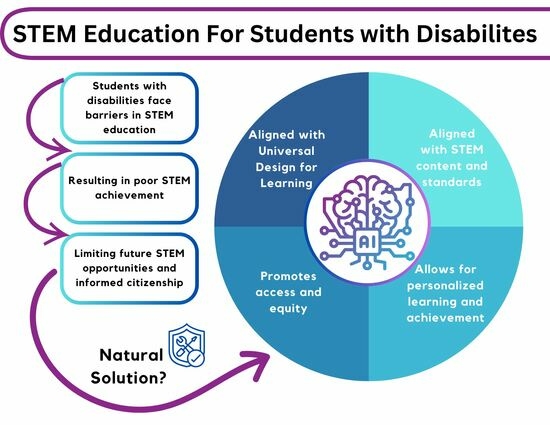
- Accessibility Features: AI can automatically generate captions, audio descriptions, and interactive elements, making content more accessible for learners with disabilities.
- Cost-Effective Solutions: By automating many aspects of instruction and administration, AI can significantly reduce the cost of delivering high-quality education, making it more affordable and widely available.
- Remote Learning Optimization: AI enhances remote learning experiences by monitoring engagement, providing personalized support, and ensuring that learners in disparate locations receive an equitable educational experience.
This widespread access fosters a more equitable global society, empowering individuals from all walks of life to pursue their educational and career aspirations, regardless of their circumstances.
Key Technologies Powering the Transformation by 2025
The realization of AI-driven personalized education relies on the synergistic development of several cutting-edge technologies. By 2025, these technologies will be more mature and integrated, forming the backbone of the new educational paradigm.
Learning Analytics and Predictive Insights
The ability to collect, process, and interpret vast amounts of data about learner behavior is fundamental to personalized education. Learning analytics, powered by AI, transforms raw data into actionable insights.
- Performance Prediction: AI models can predict a learner's likelihood of success or struggle in a particular area, allowing for timely interventions.
- Engagement Metrics: Tracking how learners interact with content, including time spent, clicks, and even emotional responses (via facial recognition or voice analysis, with ethical considerations), helps optimize content and delivery methods.
- Curriculum Optimization: By analyzing the performance of cohorts across different curricula, AI can identify which teaching methods or content sequences are most effective, informing continuous improvement.
These insights empower educators, institutions, and learners themselves to make data-driven decisions that enhance the learning experience.
Immersive Learning and Virtual Environments
The integration of AI with technologies like Virtual Reality (VR) and Augmented Reality (AR) will create highly engaging and effective immersive learning experiences. By 2025, these will move beyond novelty to become integral parts of the learning process.
- Virtual Field Trips: Learners can explore historical sites, dissect virtual organisms, or visit distant galaxies, providing contextual understanding that goes beyond textbooks.
- Skills Training Simulations: For vocational and technical skills, VR simulations powered by AI can provide realistic, risk-free environments for practice, from operating heavy machinery to performing delicate surgical procedures.
- Interactive Storytelling: AI can generate dynamic narratives within VR environments, adapting plots and challenges based on learner choices, making learning more experiential and memorable.
These environments offer a level of engagement and practical application that traditional methods simply cannot match, leading to deeper learning and skill mastery.
Blockchain for Credentialing and Competency-Based Education
The future of lifelong learning requires a robust and verifiable system for recognizing skills and competencies acquired through diverse pathways. Blockchain technology, when integrated with AI, offers a secure and transparent solution.
- Verifiable Digital Credentials: Blockchain can store immutable records of degrees, certifications, and micro-credentials, making them easily verifiable by employers worldwide and preventing fraud.
- Competency-Based Learning Tracking: AI can map learning activities to specific competencies, with blockchain recording the successful demonstration of these competencies, moving away from time-based learning to mastery-based progression.
- Personal Learning Records: Individuals can own and manage their entire learning history, from formal degrees to informal skill acquisitions, on a secure blockchain ledger, empowering them to showcase their full capabilities.
This infrastructure will be crucial for the fluidity of lifelong learning and the recognition of skills acquired through non-traditional educational routes.
Navigating the Future: Challenges and Ethical Considerations
While the potential of AI in education is immense, its implementation is not without challenges. Addressing these concerns proactively is crucial for building an equitable and effective AI-driven educational ecosystem.
Data Privacy and Algorithmic Bias
The personalization capabilities of AI rely heavily on collecting and analyzing vast amounts of student data. This raises significant concerns about data privacy and security. Furthermore, AI algorithms, trained on existing data, can inadvertently perpetuate or amplify societal biases, leading to discriminatory outcomes.
- Robust Data Protection: Implementing stringent data encryption, anonymization techniques, and clear consent policies are paramount. Regulatory frameworks like GDPR will become even more critical in education.
- Bias Mitigation: Developers must actively work to identify and mitigate algorithmic bias in AI models, ensuring fairness and equity in educational recommendations and assessments. This requires diverse training datasets and rigorous testing. For ethical considerations in AI, refer to [internal link suggestion: AI ethics in education].
- Transparency and Explainability: Learners and educators need to understand how AI systems make recommendations and decisions (the "black box" problem), fostering trust and allowing for human oversight.
The Human Element: Teachers as Facilitators
The rise of AI in education does not diminish the role of human educators; rather, it transforms it. By 2025, teachers will evolve from primary knowledge disseminators to facilitators, mentors, and guides, leveraging AI tools to enhance their effectiveness.
- Focus on Higher-Order Skills: With AI handling routine tasks and basic instruction, teachers can focus on fostering critical thinking, creativity, collaboration, and emotional intelligence – skills that AI cannot fully replicate.
- Personalized Human Interaction: Teachers will have more time for one-on-one mentoring, addressing individual student needs, and providing socio-emotional support.
- Curriculum Curation and AI Oversight: Educators will play a vital role in curating AI-generated content, validating its accuracy, and overseeing the ethical deployment of AI tools in their classrooms.
- Data Interpretation: Teachers will need to be proficient in interpreting learning analytics provided by AI to better understand student progress and inform their instructional strategies.
The synergy between human intelligence and artificial intelligence will define the most effective educational models of the future.
Practical Steps for Embracing AI in Education
For AI's transformative potential to be fully realized by 2025, proactive steps must be taken by all stakeholders in the education ecosystem.
For Learners: Taking Control of Your Education
As a learner, you are at the forefront of this change. Embrace the opportunities AI presents to tailor your educational journey.
- Explore Adaptive Platforms: Seek out online courses and learning platforms that leverage AI for personalized content delivery and feedback. Examples include Khan Academy (with AI features), Coursera, and specialized adaptive learning software.
- Identify Your Learning Style: Understand how you learn best and look for AI tools that cater to that style. Experiment with different modalities to find what resonates.
- Develop Digital Literacy: Familiarize yourself with how AI works, its capabilities, and its limitations. This understanding will empower you to leverage these tools effectively and critically.
- Embrace Lifelong Learning: Recognize that learning is a continuous process. Use AI tools for skill gap analysis to proactively identify new competencies needed for your career path and pursue continuous professional development.
For Educators and Institutions: Adapting to the New Paradigm
Educational institutions and educators must lead the charge in integrating AI thoughtfully and strategically.
- Invest in AI Literacy for Staff: Provide comprehensive professional development for teachers and administrators on how to effectively use AI tools, interpret learning analytics, and manage AI-enhanced classrooms.
- Pilot AI Solutions: Start with small-scale pilot programs to test and evaluate AI-driven platforms, gathering feedback and iterating on implementation strategies before widespread adoption.
- Foster a Culture of Innovation: Encourage experimentation and collaboration among educators to discover new ways AI can enhance learning outcomes and administrative efficiency.
- Prioritize Ethical AI Deployment: Develop clear guidelines and policies for data privacy, algorithmic bias, and the responsible use of AI in all educational contexts.
For Policy Makers and Developers: Fostering an Equitable Ecosystem
Governments and technology developers have a crucial role in shaping the future of AI in education to ensure it is equitable and beneficial for all.
- Develop Supportive Policies: Create regulatory frameworks that encourage innovation in EdTech while safeguarding student data privacy and addressing ethical concerns.
- Invest in Infrastructure: Ensure widespread access to reliable internet and necessary hardware, particularly in underserved communities, to prevent a digital divide in AI-enhanced education.
- Fund Research and Development: Support research into advanced AI applications for education, focusing on areas like personalized learning for diverse needs, immersive environments, and robust learning analytics.
- Promote Open Standards and Interoperability: Encourage the development of open standards for educational data and AI platforms to ensure seamless integration and avoid vendor lock-in.
Frequently Asked Questions
What is AI-driven personalized education?
AI-driven personalized education refers to an educational approach where artificial intelligence systems analyze individual learner data—such as performance, engagement, learning style, and pace—to create and deliver highly customized learning experiences. This includes adaptive content, individualized learning paths, real-time feedback from virtual tutors, and tailored recommendations, moving beyond traditional one-size-fits-all instruction to optimize outcomes for each student.
How will lifelong learning change by 2025 with AI?
By 2025, AI will transform lifelong learning by making it more accessible, continuous, and highly relevant to individual career paths and market demands. AI will enable proactive skill gap analysis, recommending personalized learning paths for upskilling and reskilling through micro-credentials and continuous professional development. It will democratize access to global knowledge, provide just-in-time learning, and support individuals in navigating dynamic career landscapes, making continuous adaptation the norm rather than the exception.
What are the main benefits of AI in education?
The main benefits of AI in education include significantly enhanced personalization, leading to more engaging and effective learning outcomes. AI provides adaptive learning platforms that cater to individual paces and styles, offers virtual tutors for immediate feedback and support, and conducts deep learning analytics to identify areas for improvement. It also democratizes access to education globally, helps bridge workforce skill gaps, and prepares individuals for future career challenges by fostering continuous learning.
What challenges should we expect with AI in learning?
Key challenges for AI in learning include ensuring data privacy and security, as AI systems collect extensive learner data. There's also the critical issue of algorithmic bias, where AI models might inadvertently perpetuate societal inequalities if not carefully designed and monitored. Other challenges involve ensuring equitable access to AI-powered tools, the need for continuous professional development for educators, and establishing clear ethical guidelines for the responsible deployment of AI in educational settings.

0 Komentar