
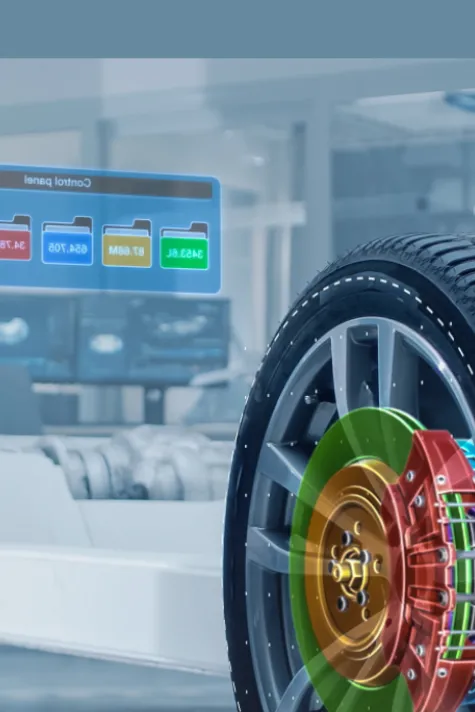
Revolutionizing Manufacturing: How Augmented Reality Optimizes Production Processes
The manufacturing landscape is undergoing a profound transformation, driven by innovative technologies that promise unprecedented levels of efficiency and precision. At the forefront of this revolution is augmented reality (AR), a powerful tool that is fundamentally reshaping how industries approach process optimization. Far beyond mere novelty, AR overlays digital information onto the real world, providing workers and managers with real-time, context-aware insights that streamline operations, enhance decision-making, and unlock significant competitive advantages. If you're looking to understand how this cutting-edge technology can elevate your production capabilities, you've come to the right place. This comprehensive guide will delve into the practical applications, tangible benefits, and strategic implementation of industrial augmented reality in modern manufacturing environments, focusing on its immense potential for optimizing complex processes.
The Core of Augmented Reality in Industrial Settings
At its heart, augmented reality in manufacturing involves superimposing computer-generated images, data, or instructions onto a user's view of the real world. Unlike virtual reality (VR), which completely immerses a user in a simulated environment, AR enhances the existing physical reality. In an industrial context, this means a technician working on an assembly line can wear smart glasses that display step-by-step instructions directly onto the component they are assembling, or a maintenance engineer can see a machine's internal schematics overlaid on its physical structure. This seamless blend of digital and physical worlds empowers workers with immediate, actionable information, significantly reducing errors and boosting worker efficiency.
The technology leverages various components, including:
- Smart Glasses/Headsets: Hands-free devices that project visual information.
- Tablets/Smartphones: Used for visual overlays through their cameras.
- Specialized Software Platforms: Tools that create, manage, and deliver AR content, often integrating with existing enterprise systems like MES (Manufacturing Execution Systems) or ERP (Enterprise Resource Planning).
- Sensors and Cameras: To track the user's position and the environment, ensuring accurate digital overlays.
This sophisticated interplay enables what is often referred to as a smart factory solution, where data from various sources – including IoT sensors and digital twin models – can be visualized in a highly intuitive and practical manner directly on the shop floor.
Key Applications of AR for Manufacturing Process Optimization
The versatility of augmented reality allows for its application across numerous stages of the manufacturing lifecycle, each contributing to significant process improvements.
Enhanced Assembly and Production Guidance
One of the most impactful applications of AR is in guiding complex assembly tasks. Workers can receive visual overlays showing where parts go, which tools to use, and the correct sequence of operations. This drastically reduces the learning curve for new employees and minimizes human error, even for highly intricate products. For example, in aerospace or automotive manufacturing, where precision is paramount, AR can guide technicians through thousands of specific steps, ensuring compliance and quality.
- Step-by-Step Visual Instructions: Overlays guide workers through each stage of assembly, highlighting correct component placement.
- Error Proofing: Immediate visual feedback if a step is performed incorrectly, preventing defects early.
- Reduced Training Time: New hires can quickly become proficient, accessing expert knowledge on demand.
- Optimized Workflows: Streamlined processes lead to faster production cycles and higher throughput on the assembly line.
Streamlined Maintenance and Repair
AR transforms maintenance operations from reactive fixes to proactive, efficient interventions. Technicians can use AR devices to access real-time diagnostics, visualize hidden components, or receive remote assistance from experts located anywhere in the world. This significantly reduces equipment downtime and improves overall operational excellence.
- Remote Expert Assistance: Field technicians can share their view with a remote expert, who can then annotate the live video feed with instructions or diagrams. This saves travel time and costs.
- Interactive Troubleshooting: AR can overlay sensor data, performance metrics, and historical maintenance records onto the equipment, helping technicians quickly diagnose issues.
- Guided Repairs: Complex repair procedures are broken down into manageable, visually guided steps, ensuring accuracy and safety.
- Predictive Maintenance Integration: When integrated with IoT sensors, AR can visualize impending failures based on real-time data, allowing for proactive maintenance before costly breakdowns occur.
Precision Quality Control and Inspection
Maintaining high quality standards is critical in manufacturing. AR empowers quality control inspectors with powerful tools to detect defects and ensure product specifications are met with unprecedented accuracy. By overlaying CAD models or design specifications directly onto physical products, deviations become immediately apparent.
- Automated Inspection Assistance: AR systems can guide inspectors through a checklist of critical points, highlighting areas for scrutiny.
- Deviation Detection: Overlaying a digital twin of a product onto its physical counterpart can instantly reveal inconsistencies or flaws that might be missed by the human eye.
- Standardized Procedures: Ensures consistent inspection protocols across shifts and personnel, leading to more reliable quality control.
- Reduced Rework: Identifying defects early in the process minimizes costly rework and scrap rates.
Immersive Training and Skill Development
Traditional training methods can be costly, time-consuming, and often lack the hands-on experience needed for complex industrial tasks. AR offers an immersive, safe, and highly effective alternative for workforce development.
- Hands-on Learning: Trainees can practice complex procedures in a safe, simulated environment without risking damage to expensive equipment or materials.
- Accelerated Onboarding: New employees can quickly grasp intricate tasks by following interactive AR guides, significantly shortening the time to productivity.
- Safety Protocol Reinforcement: AR can simulate hazardous scenarios or highlight safety procedures, preparing workers for real-world risks.
- Continuous Skill Upgrading: Workers can access updated information and new procedural guides on demand, fostering continuous learning and adaptation to new processes. These training simulations are highly effective.
Inventory Management and Logistics Optimization
Even beyond the production line, AR can significantly impact logistics and warehousing operations, contributing to overall supply chain visibility.
- Optimized Picking Routes: AR devices can guide warehouse workers along the most efficient paths to locate and pick items, reducing travel time and errors.
- Real-time Inventory Updates: Scanning items with an AR device can instantly update inventory records, providing accurate stock levels.
- Loading and Unloading Guidance: Visual cues can assist in correctly loading and unloading shipments, ensuring compliance with weight distribution and safety regulations.
Unlocking Tangible Benefits: The ROI of AR in Manufacturing
The strategic adoption of augmented reality in manufacturing translates into a multitude of measurable benefits, driving significant returns on investment (ROI) and fostering true operational efficiency.
- Increased Productivity and Throughput: By reducing errors, accelerating training, and streamlining tasks, AR directly contributes to faster production cycles and higher output. Workers spend less time searching for information or correcting mistakes.
- Reduced Errors and Rework Costs: Visual guidance and real-time feedback drastically cut down on assembly errors, quality control misses, and maintenance mistakes, leading to substantial cost savings on rework, scrap, and warranty claims.
- Improved Worker Safety and Morale: AR can highlight potential hazards, guide safe operating procedures, and provide critical information without requiring workers to look away from their tasks, enhancing safety. Empowered by intuitive tools, workers also report higher job satisfaction.
- Faster Problem Resolution and Downtime Reduction: Remote assistance and immediate access to diagnostic information mean that issues are identified and resolved quicker, minimizing costly production downtime. This is crucial for maintaining tight schedules.
- Enhanced Data Insights and Decision Making: AR systems can collect valuable data on worker performance, process efficiency, and common errors. This data can then be analyzed to identify bottlenecks, optimize workflows, and inform strategic decisions for continuous improvement.
- Knowledge Transfer and Retention: AR digitizes expert knowledge, making it accessible to a wider workforce. This is particularly valuable as experienced workers retire, ensuring critical skills and know-how are retained within the organization.
Implementing Augmented Reality: A Strategic Approach
Integrating AR into existing manufacturing processes requires a thoughtful, strategic approach to ensure successful adoption and maximize benefits.
Assessing Your Needs and Use Cases
The first step is to identify specific pain points and areas where AR can provide the most value. Conduct a thorough analysis of your current operations to pinpoint bottlenecks, high error rates, or complex procedures that could benefit from visual guidance. Start with pilot projects in a controlled environment to test feasibility and gather user feedback.
- Identify High-Impact Areas: Focus on tasks that are complex, error-prone, or require extensive training.
- Define Clear Objectives: What specific metrics do you aim to improve (e.g., reduce assembly time by X%, decrease maintenance errors by Y%)?
- Engage Stakeholders: Involve workers, supervisors, IT, and management from the outset to ensure buy-in and address concerns.
Choosing the Right Technology and Hardware
The market offers a range of AR hardware and software solutions. Selecting the appropriate tools depends on your specific use cases, environmental conditions, and budget.
- Hardware Considerations: Evaluate smart glasses (e.g., Microsoft HoloLens, Magic Leap) for hands-free operation versus tablets/smartphones for portability and lower cost. Consider ruggedness for industrial environments.
- Software Platforms: Look for platforms that offer intuitive content creation tools, robust data integration capabilities, and scalability. Many solutions are designed specifically for industrial AR.
- Connectivity: Ensure robust Wi-Fi or cellular connectivity on the shop floor to support real-time data streaming and content delivery.
Data Integration and Connectivity
For AR to deliver its full potential, it must seamlessly integrate with your existing operational data. This means connecting AR applications to your MES, ERP, PLM (Product Lifecycle Management), and IoT systems.
- Leveraging Existing Data: AR can pull CAD models, work instructions, sensor data, and inventory levels from your current systems.
- Real-time Data Flow: Ensure bidirectional data flow where AR applications can both consume and contribute data, enriching your overall smart factory solutions.
- Cybersecurity: Implement robust security measures to protect sensitive operational data transmitted via AR systems.
Overcoming Challenges and Ensuring Adoption
While the benefits are clear, successful AR implementation isn't without its challenges. Addressing these proactively is key to long-term success.
- User Acceptance: Some workers may initially be hesitant. Provide comprehensive training, demonstrate clear benefits, and involve them in the selection and refinement process.
- Data Security and Privacy: Ensure that data collection and transmission comply with all relevant regulations and internal policies.
- Scalability: Plan for future expansion. Choose solutions that can scale from pilot projects to company-wide deployment.
- Content Creation: Developing effective AR content (3D models, animated instructions) requires specialized skills. Consider training internal teams or partnering with experienced AR content developers.
The Future Landscape: AR as a Catalyst for Industry 4.0
Augmented reality is not an isolated technology; it is a critical enabler of Industry 4.0, working in synergy with other advancements like the Internet of Things (IoT), Artificial Intelligence (AI), and digital twin technology. As these technologies mature, the capabilities of AR in production will only expand.
Imagine a future where:
- AI-Powered AR: AI algorithms analyze worker movements and provide real-time, adaptive guidance based on individual performance and environmental conditions.
- Hyper-Personalized Experiences: AR systems will learn individual worker preferences and skill levels, tailoring instructions and information delivery accordingly.
- Enhanced Collaboration: Multiple users can interact with the same AR overlay, fostering collaborative problem-solving across different locations.
- Seamless Integration with Robotics: AR can provide intuitive interfaces for programming and monitoring collaborative robots, further optimizing the shop floor.
The journey towards fully optimized manufacturing processes is continuous, and augmented reality stands as a powerful beacon, guiding industries toward a more efficient, productive, and resilient future. Embracing this technology today is not just about staying competitive; it's about pioneering the next era of industrial innovation and securing lasting operational excellence.
Frequently Asked Questions
What is the primary benefit of augmented reality in manufacturing?
The primary benefit of augmented reality in manufacturing is its ability to significantly enhance process optimization by providing workers with real-time, context-aware information directly within their field of view. This leads to increased efficiency, reduced errors, faster training, and improved quality control, ultimately driving substantial cost savings and operational excellence. It transforms complex tasks into intuitive, guided procedures, benefiting everyone from assembly line workers to maintenance technicians.
How does AR contribute to worker efficiency on the shop floor?
AR contributes to worker efficiency on the shop floor by offering hands-free, step-by-step visual instructions and immediate access to critical data. This minimizes cognitive load, reduces the need to consult manuals or computer screens, and prevents mistakes before they occur. For example, an AR headset can highlight the exact location for a component, display torque specifications, or even show a virtual model of the finished product, enabling workers to complete tasks faster and with greater accuracy, significantly boosting overall worker efficiency.
Is AR difficult to integrate with existing manufacturing systems?
Integrating augmented reality with existing manufacturing systems, such as MES, ERP, or PLM, requires careful planning but is increasingly streamlined thanks to modern software platforms. While initial setup may involve data mapping and API development, many industrial AR solutions are designed with robust integration capabilities. The key is to ensure that the AR system can seamlessly pull data (e.g., CAD models, work orders, sensor data) from and push data back into your core enterprise systems, creating a truly connected smart factory solution.
Can AR improve quality control in complex assembly processes?
Absolutely. Augmented reality significantly improves quality control in complex assembly processes by allowing inspectors and assemblers to overlay digital models and specifications directly onto physical products. This enables precise comparison, immediate identification of deviations, and guided inspection procedures. For instance, an AR system can highlight areas to check, verify part alignment, or confirm proper fastener installation, ensuring consistent adherence to design specifications and drastically reducing defects and rework, thereby enhancing overall quality control.
What hardware is typically used for industrial augmented reality applications?
For industrial augmented reality applications, the most common hardware includes purpose-built smart glasses or headsets (e.g., Microsoft HoloLens, Vuzix, RealWear) which provide hands-free operation and project digital information directly into the user's field of vision. Ruggedized tablets and smartphones are also frequently used, offering portability and versatility for tasks where a hands-free approach isn't strictly necessary. The choice of hardware often depends on the specific use case, environmental conditions on the shop floor, and the required level of immersion and interactivity.

0 Komentar