
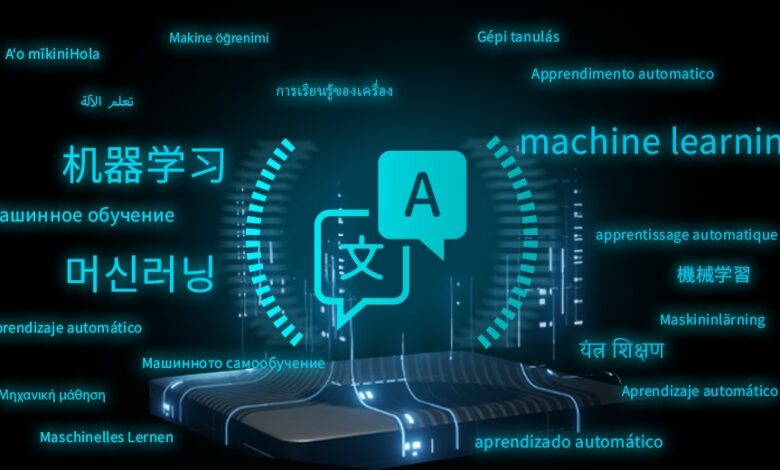
The Future of AI-Enhanced Language Translation Services 2025: Bridging Global Divides with Intelligent Communication
Prepare for a profound transformation in how we connect across linguistic boundaries. By 2025, the future of AI-enhanced language translation services will redefine global communication, moving far beyond mere word-for-word conversion to deliver nuanced, context-aware, and emotionally intelligent interactions. This era promises unparalleled accuracy and real-time capabilities, empowering businesses and individuals to effortlessly transcend language barriers. Discover how advanced AI, particularly sophisticated neural machine translation (NMT), is set to revolutionize everything from international business negotiations to casual cross-cultural conversations, making seamless multilingual engagement a tangible reality.
The Dawn of Hyper-Contextual AI Translation
The evolution of AI in language translation is accelerating at an unprecedented pace. While current machine translation tools offer impressive speed, the next generation, poised for significant impact by 2025, will excel in hyper-contextual understanding. This means AI will not only process words but also grasp the underlying meaning, tone, and cultural nuances of a conversation or document. The shift from statistical machine translation to deep learning models has already been a game-changer, but the coming years will see NMT systems becoming even more sophisticated, capable of discerning sarcasm, irony, and subtle emotional cues that are critical for genuine cross-cultural communication.
Beyond Words: Understanding Intent and Emotion
One of the most exciting advancements in the future of AI-enhanced language translation services will be the AI's ability to interpret and replicate human intent and emotion. Imagine an AI translator that understands not just what is said, but how it is said, and can convey that same sentiment in the target language. This involves integrating AI models with advanced sentiment analysis, vocal tonality recognition, and even non-verbal cues (in multimodal applications). For instance, an AI might learn to differentiate between a formal business proposal and a friendly casual chat, adjusting its translation style accordingly. This level of sophistication is crucial for fields like diplomacy, customer service, and creative content localization, where precise emotional resonance is paramount. Businesses seeking to truly connect with global audiences must prepare for this nuanced approach to multilingual content creation.
Real-Time Translation: Bridging Global Divides Seamlessly
The vision of instant, real-time language translation is rapidly becoming a reality. By 2025, AI-powered translation will enable seamless communication in live scenarios, whether it's an international conference, a video call with overseas partners, or even a tourist navigating a foreign city. Devices equipped with advanced AI will offer near-instantaneous audio and text translation, significantly reducing friction in global business and personal interactions. This capability will be a massive boon for industries like hospitality, healthcare, and logistics, where rapid and accurate communication is critical for operational efficiency and safety.
The Integration of Multimodal AI
The next frontier for AI translation advancements involves multimodal AI, which combines various forms of input and output. This includes:
- Speech-to-Text and Text-to-Speech Enhancements: More natural-sounding AI voices and highly accurate speech recognition, even in noisy environments or with diverse accents.
- Video and Image Translation: AI capable of translating text within images or video overlays, useful for signs, menus, or subtitles, enhancing immersive experiences.
- Augmented Reality (AR) Translation: AR glasses or smartphone apps that translate text and even live conversations in real-time as you look at them, offering a truly futuristic solution for navigating foreign environments.
These multimodal capabilities will redefine how individuals and organizations interact with the world, making language barriers increasingly obsolete. Imagine walking through a foreign city and having street signs, restaurant menus, and even conversations translated instantly before your eyes. This is the promise of AI-enhanced translation services in the very near future.
Customization and Personalization: Tailoring Translation to Your Needs
One of the most significant shifts in the future of AI-enhanced language translation services will be the move towards highly customizable and personalized models. Generic translation engines, while useful, often fall short when dealing with industry-specific jargon, brand voice, or unique corporate terminology. By 2025, organizations will increasingly leverage AI to create bespoke translation models trained on their specific data, ensuring unparalleled accuracy and consistency for their unique needs.
Human-in-the-Loop: The Evolving Role of Professional Translators
Far from replacing human expertise, AI will elevate the role of professional translators. The human-in-the-loop model will become standard, where AI handles the bulk of the initial translation, and human experts perform critical post-editing, quality assurance, and refinement. This collaboration leverages the speed and scale of AI with the nuanced understanding and cultural intelligence of human linguists. Professional translators will transition from mere translators to language consultants, specializing in:
- AI Training and Fine-tuning: Guiding AI models to understand specific industry terminology, brand guidelines, and desired tone.
- Quality Assurance: Ensuring the output is not only grammatically correct but also culturally appropriate and resonant.
- Creative Transcreation: Adapting marketing messages and creative content to evoke the same emotional response in different cultures, a task that still requires significant human creativity.
- Complex Legal and Medical Translations: Where even minor inaccuracies can have significant consequences, human oversight remains indispensable.
This symbiotic relationship will lead to higher quality, faster turnaround times, and more cost-effective localization services than ever before. Organizations should consider investing in training their existing linguistic teams to become proficient in AI post-editing and quality control.
Industry-Specific Impact and Opportunities
The impact of AI-enhanced language translation services will ripple across virtually every industry, unlocking new opportunities for growth and efficiency.
- E-commerce and Retail: Expanding global market reach by instantly translating product descriptions, customer reviews, and support interactions, leading to enhanced customer engagement and conversion rates.
- Healthcare: Facilitating communication between medical professionals and diverse patient populations, improving diagnosis accuracy and patient care, especially in emergency situations.
- Legal and Compliance: Streamlining the review of multilingual legal documents, contracts, and patents, reducing costs and accelerating international legal processes.
- Media and Entertainment: Rapidly localizing films, TV shows, games, and digital content for global audiences, accelerating content distribution and consumption.
- Education: Providing instant translation for online courses, research papers, and educational materials, making knowledge accessible to a wider global student body.
- Travel and Tourism: Enhancing traveler experiences with real-time translation for guides, hotel staff, and local interactions, making international travel less daunting.
Strategic Advantages for Businesses
For businesses looking to thrive in the global marketplace, integrating advanced AI translation technologies is not just an option, but a strategic imperative. The advantages are clear:
- Rapid Market Expansion: Quickly localize products, services, and marketing campaigns to enter new international markets.
- Enhanced Customer Experience: Provide multilingual customer support and content, improving satisfaction and loyalty.
- Operational Efficiency: Automate routine translation tasks, freeing up human resources for more complex, high-value work.
- Competitive Edge: Companies that adopt these technologies early will gain a significant advantage in reaching and serving diverse global audiences.
Consider exploring how AI can transform your multilingual strategy to unlock new revenue streams and improve global collaboration. Companies like global market entry consultants are already advising clients on these integrations.
Navigating the Challenges: Ethics, Bias, and Data Privacy
While the future of AI-enhanced language translation services holds immense promise, it's crucial to address the inherent challenges. Ethical considerations, potential biases, and data privacy concerns remain paramount. AI models are trained on vast datasets, and if these datasets contain biases (e.g., gender, racial, cultural), the AI can perpetuate and even amplify them in its translations. Ensuring ethical AI translation requires constant vigilance and proactive measures.
Ensuring Accuracy and Trustworthiness
The trustworthiness of AI translation hinges on its accuracy and the transparency of its operations. Developers and users must work together to:
- Identify and Mitigate Bias: Continuously monitor translation outputs for unintended biases and refine training data to promote fairness and inclusivity.
- Prioritize Data Privacy: Implement robust data encryption and privacy protocols, especially when handling sensitive personal or corporate information.
- Maintain Transparency: Be clear about when AI is used for translation and its limitations, managing user expectations.
- Implement Human Oversight: As previously discussed, the human-in-the-loop model is essential for maintaining high standards of quality and addressing complex or sensitive content.
The development of industry standards and regulatory frameworks will also play a critical role in shaping a responsible future for AI-powered translation.
Actionable Strategies for Embracing AI Translation by 2025
To effectively harness the power of AI-enhanced language translation services, organizations and individuals should consider these practical steps:
- Pilot AI Translation Tools: Start with non-critical internal communications or specific content types to evaluate performance and identify areas for customization.
- Invest in Data Infrastructure: Ensure your organization has clean, well-organized, and accessible multilingual data to train and fine-tune custom AI models.
- Upskill Your Teams: Train existing translators and content creators on AI post-editing, prompt engineering, and integrating AI tools into their workflows.
- Partner with Experts: Collaborate with specialized AI translation providers or consultants who can offer tailored solutions and expertise in deploying advanced NMT systems.
- Develop a Multilingual Content Strategy: Re-evaluate your overall content strategy to leverage AI for rapid content creation and localization, reaching new audiences more efficiently.
- Focus on User Experience: Design interfaces and workflows that seamlessly integrate AI translation, making it intuitive and effective for end-users.
By proactively adopting these strategies, businesses can position themselves at the forefront of global communication, transforming challenges into unprecedented opportunities for growth and connection. The future of translation services is collaborative, intelligent, and profoundly global.
Frequently Asked Questions
What are the primary benefits of AI-enhanced language translation services by 2025?
By 2025, the primary benefits of AI-enhanced language translation services will include significantly improved accuracy due to hyper-contextual understanding, real-time communication capabilities across various platforms, and highly customizable translation models tailored to specific industry needs or brand voices. This leads to faster content localization, broader global market reach, and enhanced cross-cultural communication, ultimately driving operational efficiency and customer satisfaction for businesses.
Will AI-powered translation replace human translators in the future?
No, AI-powered translation is not expected to entirely replace human translators. Instead, it will transform their roles. By 2025, human translators will increasingly focus on high-value tasks such as post-editing AI outputs, ensuring cultural nuance and accuracy, training and fine-tuning AI models, and handling complex or highly sensitive content. The synergy between AI speed and human expertise, often referred to as the human-in-the-loop model, will become the industry standard, leading to more efficient and higher-quality translation outcomes.
How will AI translation services handle cultural nuances and idiomatic expressions?
By 2025, AI-enhanced language translation services, particularly advanced NMT models, will be far more adept at handling cultural nuances and idiomatic expressions than current systems. Through extensive training on vast, diverse datasets and continuous learning, these AI systems will develop a deeper understanding of semantic relationships and contextual implications. While achieving perfect cultural sensitivity remains a challenge, the integration of sentiment analysis and human feedback in post-editing processes will significantly improve their ability to translate not just words, but also underlying cultural meanings and subtle emotional tones.
What industries will benefit most from advanced AI translation by 2025?
Virtually all industries will benefit, but some will see a more transformative impact. Industries such as e-commerce, which relies heavily on global market reach and customer engagement; healthcare, for critical communication with diverse patient populations; legal services, for efficient processing of multilingual documents; and the media & entertainment sector, for rapid content localization, are poised to gain immensely. These sectors will leverage AI-powered translation to overcome language barriers, expand operations, and deliver superior services globally.

0 Komentar