
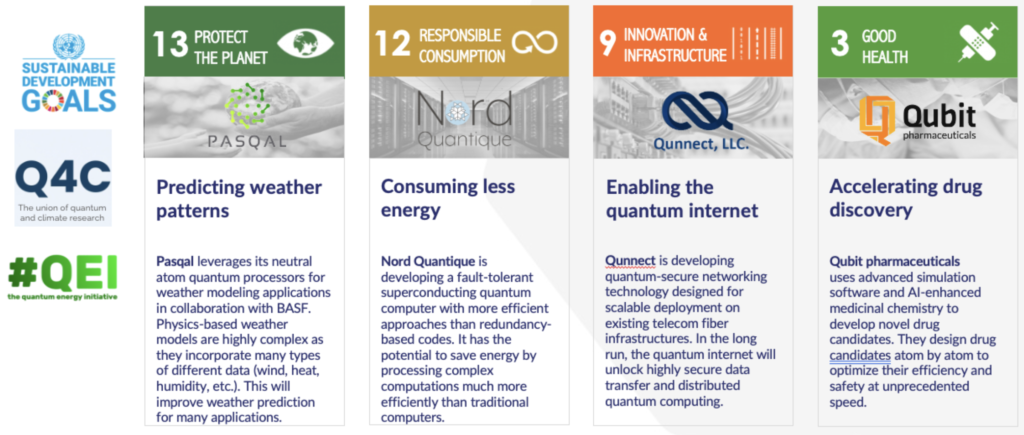
Unlocking a Sustainable Future: The Power of Quantum Computing for Global Development Goals
The pursuit of a truly sustainable future, as encapsulated by the United Nations' Sustainable Development Goals (SDGs), demands innovative solutions to complex global challenges. From mitigating climate change to eradicating poverty and ensuring universal access to healthcare, these goals require unprecedented analytical power and problem-solving capabilities. Enter quantum computing, a revolutionary paradigm poised to transcend the limitations of classical computing and unlock new frontiers in our quest for sustainability. This article delves into how this cutting-edge technology can become a pivotal force in achieving the ambitious targets set forth by the SDGs, offering a unique perspective on its transformative potential.
The Nexus of Quantum Computing and Sustainable Development
At its core, quantum computing leverages the principles of quantum mechanics – superposition, entanglement, and interference – to process information in fundamentally new ways. Unlike traditional computers that rely on bits representing 0s or 1s, quantum computers use qubits, which can represent both simultaneously, leading to an exponential increase in computational power. This inherent capability makes quantum computing uniquely suited to tackle problems that are currently intractable for even the most powerful supercomputers, problems often found at the heart of global sustainability efforts.
The Sustainable Development Goals (SDGs) are a collection of 17 interlinked global goals designed to be a "blueprint to achieve a better and more sustainable future for all." They address critical global challenges, including poverty, inequality, climate change, environmental degradation, peace, and justice. The sheer complexity and interconnectedness of these challenges necessitate tools that can model intricate systems, optimize resource allocation, and accelerate scientific discovery. This is precisely where quantum technology offers a compelling advantage, promising to revolutionize everything from energy grids to drug discovery and climate modeling.
Addressing SDG 7: Affordable and Clean Energy
One of the most pressing SDGs is ensuring access to affordable and clean energy. The transition to renewable energy sources like solar and wind power, while crucial, faces significant challenges in terms of efficiency, storage, and grid integration. Quantum computing can play a transformative role:
- Material Science for Better Batteries: Quantum simulations can model new materials at an atomic level, accelerating the discovery of more efficient battery technologies for energy storage. This includes developing novel electrolytes, electrodes, and catalysts that could dramatically improve the performance and reduce the cost of renewable energy storage systems.
- Optimizing Smart Grids: Managing complex energy grids with fluctuating renewable inputs requires advanced optimization. Quantum algorithms can process vast amounts of data from sensors, weather patterns, and consumption trends to predict energy demand and supply more accurately, ensuring grid stability and minimizing waste. This leads to more resilient and efficient energy distribution networks.
- Catalyst Discovery for Fuel Cells: Quantum chemistry simulations can accelerate the design of new catalysts for hydrogen fuel cells and other clean energy technologies, making their production more cost-effective and scalable. This is vital for decarbonizing heavy industries and transportation.
Impacting SDG 13: Climate Action
Climate action requires deep understanding and predictive modeling of Earth's complex systems. Classical computing limitations often hinder the precision and speed needed for comprehensive climate simulations. Quantum computing offers a path forward:
- Advanced Climate Modeling: Simulating climate change involves intricate interactions between oceans, atmosphere, land, and ice. Quantum computers can model these complex systems with unprecedented accuracy, leading to more reliable climate predictions and better-informed policy decisions. This includes predicting extreme weather events and understanding feedback loops.
- Carbon Capture and Storage (CCS): Designing efficient materials for carbon capture is a complex quantum chemistry problem. Quantum simulations can help engineers discover and optimize materials that can effectively absorb CO2 from the atmosphere or industrial emissions, making CCS more viable and cost-effective.
- Atmospheric Chemistry Simulations: Understanding the reactions of greenhouse gases and pollutants in the atmosphere is crucial. Quantum algorithms can simulate these chemical processes with greater fidelity, providing insights into their impact and potential mitigation strategies.
Quantum Computing's Role in Advancing Global Health and Well-being (SDG 3)
Improving global health outcomes is another area where quantum computing promises significant breakthroughs, particularly in drug discovery and personalized medicine.
- Drug Discovery and Development: The process of finding new drugs is incredibly time-consuming and expensive. Quantum chemistry simulations can accurately model molecular interactions, enabling researchers to screen potential drug candidates much faster and design new molecules with specific therapeutic properties. This accelerates the development of treatments for diseases like cancer, Alzheimer's, and emerging pandemics.
- Personalized Medicine: Analyzing vast genomic and proteomic datasets to tailor treatments to individual patients is computationally intensive. Quantum machine learning algorithms can identify subtle patterns and correlations in biological data, leading to more precise diagnoses and highly effective personalized therapies.
- Medical Imaging Enhancement: Advanced quantum algorithms could potentially improve the resolution and speed of medical imaging techniques like MRI, leading to earlier and more accurate disease detection.
Transforming Industry, Innovation, and Infrastructure (SDG 9)
Quantum computing is inherently an innovation driver, directly contributing to Industry, Innovation, and Infrastructure by enhancing computational capabilities across various sectors.
- Optimization of Supply Chains: Global supply chains are incredibly complex, susceptible to disruptions, and often inefficient. Quantum optimization algorithms can model and optimize logistics, routing, and resource allocation in real-time, making supply chains more resilient, efficient, and sustainable. This reduces waste and improves delivery times.
- Advanced Materials Design: Beyond energy and health, quantum simulations are revolutionizing materials science across industries. From designing lighter, stronger alloys for aerospace to more durable components for infrastructure, quantum computing facilitates the creation of materials with unprecedented properties, driving industrial innovation.
- Financial Modeling and Economic Growth: Quantum algorithms can improve the accuracy of financial models, risk assessment, and fraud detection. While this might seem less direct, a stable and efficient financial system is crucial for sustainable economic growth and investment in SDG-related projects. [Explore more about Quantum Computing in Finance].
Ensuring Responsible Consumption and Production (SDG 12)
Achieving responsible consumption and production patterns is critical for environmental sustainability. Quantum computing can contribute by optimizing resource utilization and minimizing waste.
- Waste Reduction through Optimization: From manufacturing processes to logistics, quantum optimization can identify inefficiencies and reduce waste by optimizing resource allocation, production schedules, and inventory management. This directly supports a circular economy model.
- Sustainable Agriculture: Quantum machine learning can analyze vast datasets related to soil composition, weather patterns, and crop health to optimize irrigation, fertilization, and pest control, leading to more sustainable farming practices and improved food security. This contributes to both SDG 12 and SDG 2 (Zero Hunger).
- Environmental Monitoring and Data Processing: The ability of quantum computers to process massive datasets can enhance environmental monitoring. Analyzing complex sensor data from air quality, water pollution, and deforestation can provide real-time insights, enabling quicker and more effective interventions.
Challenges and the Path Forward for Quantum for SDGs
While the potential of quantum computing for sustainable development goals is immense, several challenges must be addressed:
- Technological Maturity: Quantum computers are still in their early stages of development. Current machines are noisy and prone to errors, limiting their practical applications. Significant research and engineering efforts are required to build fault-tolerant, large-scale quantum computers.
- Talent Gap: There is a critical shortage of experts skilled in quantum computing, quantum algorithms, and their application to real-world problems. Investing in education and training programs is essential to build the workforce needed to harness this technology.
- Accessibility and Equity: Ensuring that the benefits of quantum computing are accessible to all nations, especially developing ones, is crucial. International collaboration and open-source initiatives can help democratize access to this powerful technology.
- Ethical Considerations: As with any powerful technology, ethical guidelines must be established to ensure responsible development and deployment of quantum computing, preventing misuse and ensuring equitable benefits.
To fully realize the promise of quantum computing for sustainability, a concerted effort is needed from governments, academia, industry, and international organizations. Investing in fundamental research, fostering interdisciplinary collaboration, and developing practical applications are key steps. Creating open platforms and sharing knowledge will accelerate progress and ensure that these powerful tools are used for the collective good. [Discover more about Ethical Quantum Development].
Practical Implementation and Actionable Tips for Leveraging Quantum for SDGs
For organizations and nations looking to engage with quantum solutions for sustainable development, here are some actionable tips:
- Invest in Quantum Literacy: Begin by educating your workforce and policymakers about the basics of quantum computing and its potential applications. This foundational knowledge is crucial for identifying opportunities.
- Identify Quantum-Ready Problems: Not all problems are suited for quantum computers. Focus on highly complex optimization, simulation, or machine learning challenges that are currently intractable with classical methods and directly align with SDG targets.
- Form Strategic Partnerships: Collaborate with quantum hardware and software providers, research institutions, and other organizations already exploring quantum applications. This can accelerate learning and access to resources.
- Start Small with Hybrid Approaches: Begin by exploring hybrid quantum-classical algorithms, which leverage the strengths of both quantum and classical computing. These can provide early insights and tangible results even with current quantum hardware.
- Pilot SDG-Specific Quantum Projects: Launch pilot projects focused on a specific SDG challenge. For instance, a pilot could involve optimizing a local energy grid using quantum-inspired algorithms or simulating a new material for water purification.
- Advocate for Policy Support: Encourage government funding for quantum research and development, as well as policies that support the ethical and equitable deployment of quantum technologies for public good.
The journey towards a quantum-enabled sustainable future will be incremental, but the foundational research and early applications already demonstrate immense promise. By strategically investing and collaborating, we can harness this extraordinary computational power to overcome some of humanity's most pressing challenges.
Frequently Asked Questions
What is the primary advantage of quantum computing for sustainable development goals compared to classical computing?
The primary advantage lies in quantum computing's ability to solve problems that are computationally intractable for even the most powerful classical supercomputers. This includes complex optimization problems, such as those found in supply chain logistics or energy grid management, and highly accurate simulations of molecular and material properties, crucial for developing new drugs, catalysts, and advanced materials for clean energy and carbon capture. Its capacity for parallel processing and handling vast amounts of data with complex interdependencies makes it uniquely suited for the multifaceted challenges of the Sustainable Development Goals.
How can quantum computing directly help mitigate climate change (SDG 13)?
Quantum computing can directly help mitigate climate change by enabling more accurate and detailed climate modeling, allowing scientists to better predict climate patterns and the impact of mitigation strategies. It can also accelerate the discovery and optimization of new materials for carbon capture and storage (CCS) technologies, making them more efficient and cost-effective. Furthermore, quantum simulations can aid in the development of more efficient renewable energy sources and storage solutions, directly reducing reliance on fossil fuels and lowering greenhouse gas emissions.
Is quantum computing mature enough to make a real impact on SDGs today?
While quantum computing is still in its nascent stages, it is already beginning to show promise in specific, niche applications. Current "noisy intermediate-scale quantum" (NISQ) devices are not yet powerful enough for widespread, fault-tolerant applications. However, they are being used for early research and development in areas like materials science and optimization. The real, transformative impact on the SDGs is anticipated in the medium to long term, as the technology matures and fault-tolerant quantum computers become available. The foundational work being done today is crucial for future breakthroughs.
What are the key challenges in applying quantum computing to sustainable development?
Key challenges include the current technological immaturity of quantum hardware, which needs to become more stable and scalable. There is also a significant global talent gap, requiring more experts in quantum algorithm development and application. Ensuring equitable access to this powerful technology, especially for developing nations, is another critical consideration to prevent exacerbating existing inequalities. Finally, establishing robust ethical frameworks for quantum technology's development and deployment is essential to ensure its benefits are used responsibly for the greater good of humanity and the planet.

0 Komentar