
Complete Guide
Welcome to the bleeding edge of computation. As a professional SEO expert and content strategist, I understand the critical importance of authoritative, in-depth content. This article is designed to be your definitive guide to quantum computing qubit types and technologies, exploring the intricate world of quantum bits that power this revolutionary field. We'll unravel the fundamental principles that differentiate quantum computers from their classical counterparts, providing a comprehensive overview of the diverse qubit architectures currently under development. From the superconducting circuits chilled to near absolute zero to the meticulously controlled trapped ions, understanding these core technologies is paramount to grasping the future of computing. Prepare to dive deep into the challenges, breakthroughs, and the incredible potential held within each unique quantum bit, optimizing your understanding for both search engines and genuine knowledge acquisition.
The Fundamental Building Blocks: Understanding Qubits
At the heart of quantum computing lies the quantum bit, or qubit. Unlike classical bits, which represent information as either a 0 or a 1, qubits leverage the peculiar phenomena of quantum mechanics to hold vastly more complex information. This fundamental difference is what gives quantum computers their potentially exponential power.
- Superposition: A qubit can exist in a combination of both 0 and 1 simultaneously. Imagine a spinning coin that is neither heads nor tails until it lands. This ability to be in multiple states at once is a core strength, allowing quantum computers to process many possibilities in parallel.
- Quantum Entanglement: When two or more qubits become entangled, their fates become intrinsically linked, regardless of the physical distance separating them. Measuring the state of one instantly reveals information about the state of the other, even if they are light-years apart. This non-local correlation is a powerful resource for quantum algorithms, enabling complex calculations that are impossible for classical machines.
- Decoherence: The Achilles' heel of quantum computing. Qubits are incredibly fragile and easily lose their quantum properties (superposition and entanglement) when they interact with their environment. This loss of coherence, known as decoherence, is a major hurdle that all qubit technologies strive to overcome, often requiring extreme isolation and precise control. Maintaining a long coherence time is critical for performing complex quantum operations.
The quest for stable, controllable, and scalable qubits is the driving force behind quantum hardware innovation. Each qubit type represents a distinct approach to harnessing these quantum phenomena, with its own set of advantages, challenges, and technological requirements.
Diverse Architectures: Exploring Key Qubit Types
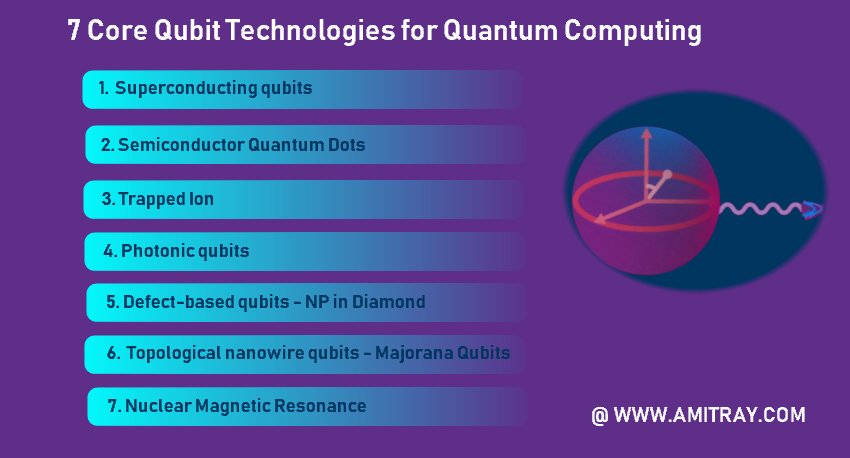
The landscape of quantum computing is rich with diverse qubit implementations, each vying for supremacy in the race towards fault-tolerant quantum computers. Understanding these distinct approaches is crucial for anyone interested in the practical realities of quantum technology. Let's explore the leading contenders and their underlying principles.
Superconducting Qubits
Perhaps the most prominent and widely publicized qubit type, superconducting qubits are the choice of major players like IBM and Google. These qubits are essentially microscopic circuits made from superconducting materials, typically aluminum or niobium, operating at temperatures just fractions of a degree above absolute zero (around 15 millikelvin). This extreme cooling is essential to eliminate electrical resistance and thermal noise, allowing quantum phenomena to persist.
- Mechanism: Superconducting qubits utilize Josephson junctions, which are weak links between two superconductors. These junctions behave like tunable non-linear inductors, creating energy levels that can be manipulated to represent 0 and 1. The most common type is the transmon qubit, known for its relative insensitivity to charge noise.
- Advantages:
- Fast Gate Operations: Superconducting qubits can perform quantum operations (gates) very quickly, often in tens of nanoseconds.
- Scalability Potential: Fabrication leverages mature semiconductor manufacturing techniques, offering a path towards larger integrated quantum processors.
- Well-Understood Physics: The underlying physics is well-established, allowing for sophisticated control and measurement.
- Challenges:
- Cryogenic Temperatures: The need for massive dilution refrigerators makes the systems expensive, bulky, and energy-intensive.
- Short Coherence Times: Despite the extreme cold, superconducting qubits are still susceptible to decoherence from environmental noise, with coherence times typically in the tens of microseconds.
- Connectivity: Achieving high connectivity between many qubits on a chip remains a complex engineering challenge.
- Key Players: IBM Quantum, Google Quantum AI (Sycamore processor), Rigetti Computing, Intel, Quantinuum (combining Honeywell and Cambridge Quantum).
Trapped-Ion Qubits
Often lauded for their exceptional coherence and fidelity, trapped-ion qubits utilize individual atoms suspended in a vacuum by electromagnetic fields. Lasers are then used to manipulate and read out their quantum states.
- Mechanism: Each ion's internal energy levels (specifically, hyperfine states) are used to encode the qubit's 0 and 1 states. Ions are typically trapped in a linear array or 2D crystal using radiofrequency electric fields (Paul traps) and cooled with lasers to near absolute zero to minimize motion and environmental interaction. Entanglement is achieved by coupling the ions' internal states to their collective motion.
- Advantages:
- Long Coherence Times: Ions are naturally well-isolated from their environment, leading to coherence times that can extend for seconds, significantly longer than superconducting qubits.
- High Fidelity Gates: Trapped-ion systems boast some of the highest reported gate fidelities (accuracy of operations) for both single and two-qubit gates.
- All-to-All Connectivity: In principle, any ion can be entangled with any other ion in the trap, simplifying algorithm design.
- Challenges:
- Slow Gate Operations: Laser-based gates are generally slower than microwave-based superconducting gates, often in the microsecond range.
- Scalability: Scaling up to hundreds or thousands of individually controllable ions while maintaining performance is a significant engineering hurdle, requiring complex trap designs and laser delivery systems.
- Precision Control: The precise tuning and control of multiple lasers for each ion is technically demanding.
- Key Players: IonQ, Quantinuum (formerly Honeywell Quantum Solutions), AQT (Alpine Quantum Technologies), university research groups globally.
Topological Qubits
A more exotic and theoretical approach, topological qubits aim to encode quantum information in the topological properties of matter, making them inherently robust against local environmental noise. This approach promises fault tolerance at the hardware level.
- Mechanism: Topological qubits are hypothesized to use quasiparticles called Majorana fermions, which emerge in specific exotic materials (e.g., topological superconductors). The quantum information is encoded not in the individual particles themselves, but in their collective arrangement and "braiding" paths, making it robust against local disturbances.
- Advantages:
- Inherent Fault Tolerance: The information is non-locally encoded, meaning a local disturbance cannot easily corrupt the qubit state. This offers a path to highly robust quantum computation without relying solely on intensive software-based error correction.
- Long Coherence Times (theoretically): Expected to have extremely long coherence times due to their protected nature.
- Challenges:
- Experimental Difficulty: Majorana fermions are incredibly difficult to create and manipulate in the lab, requiring highly specialized materials and precise conditions.
- Early Stage Development: This technology is still largely in the fundamental research phase, with no clear timeline for practical quantum processors.
- Scalability: Even if individual qubits are realized, scaling them into a large, controllable system remains a distant challenge.
- Key Players: Microsoft (actively researching), various academic institutions.
Semiconductor (Spin) Qubits
Leveraging existing semiconductor manufacturing infrastructure, semiconductor or spin qubits encode information in the spin of individual electrons or holes confined in quantum dots (tiny semiconductor structures).
- Mechanism: Electrons are trapped in "quantum dots" formed within a silicon or germanium substrate. The spin state (up or down) of the electron serves as the qubit. Microwaves or magnetic fields are used to manipulate these spins.
- Advantages:
- CMOS Compatibility: The potential to integrate with existing silicon chip fabrication processes, offering a scalable path for mass production and integration with classical control electronics.
- Small Footprint: Quantum dots are extremely small, allowing for high qubit densities.
- Relatively Long Coherence: Silicon, with its low nuclear spin, provides a quiet environment for electron spins, leading to promising coherence times.
- Challenges:
- Individual Control: Precisely controlling and measuring individual electron spins in a dense array is challenging.
- Variability: Manufacturing variations in quantum dots can lead to slight differences in qubit properties, complicating uniform control.
- Operating Temperatures: Still requires cryogenic temperatures, though potentially higher than superconducting qubits.
- Key Players: Intel, QuTech (TU Delft/TNO), Silicon Quantum Computing (Australia), CEA-Leti (France).
Photonic Qubits
Photonic qubits encode quantum information in individual photons (particles of light). This approach offers unique advantages, particularly for quantum communication and networking.
- Mechanism: Quantum information is encoded in properties of single photons, such as polarization, path, or time-bin. Linear optical components (beamsplitters, phase shifters) are used to perform quantum operations. Entanglement can be generated via non-linear optical effects.
- Advantages:
- Room Temperature Operation: Photons do not require extreme cooling, simplifying the operating environment.
- Long Distance Communication: Photons are ideal for transmitting quantum information over long distances (e.g., fiber optics), crucial for building a quantum internet.
- Low Decoherence: Photons interact very weakly with their environment, making them robust carriers of quantum information.
- Challenges:
- Probabilistic Gates: Many quantum gates with photons are probabilistic, meaning they only succeed with a certain probability, which can make scaling challenging.
- Scalability: Building large-scale, deterministic quantum computers with photons requires efficient single-photon sources and detectors, and complex optical routing.
- Measurement: Detecting single photons efficiently is difficult.
- Key Players: Xanadu, PsiQuantum, Quandela, university research groups.
Neutral Atom Qubits
A rapidly emerging technology, neutral atom qubits use arrays of individual, uncharged atoms trapped and manipulated by highly focused laser beams (optical tweezers).
- Mechanism: Individual neutral atoms (e.g., Rubidium or Cesium) are trapped in optical tweezers, which are highly focused laser beams. The quantum information is encoded in the atoms' internal energy levels. To create entanglement, atoms are excited to highly energetic "Rydberg states," which causes them to interact strongly with neighboring atoms over long distances.
- Advantages:
- Excellent Scalability: Arrays of hundreds to thousands of individual atoms can be created and rearranged dynamically.
- Long Coherence Times: Neutral atoms are well-isolated from their environment, leading to long coherence times.
- High Connectivity: The ability to move and rearrange atoms in the trap allows for reconfigurable qubit connectivity.
- Room Temperature (in principle for trapping): While atom cooling is required, the vacuum chamber itself doesn't need to be cryogenically cold like superconducting systems.
- Challenges:
- Complex Optical Systems: Requires a highly complex and stable laser system to trap, cool, and manipulate individual atoms.
- Gate Speed: Gate operations, especially multi-qubit gates using Rydberg interactions, can be slower than superconducting qubits.
- Atom Loss: Maintaining a large number of atoms in a trap without loss over time is an ongoing engineering challenge.
- Key Players: Pasqal, ColdQuanta (now Infleqtion), Atom Computing, university research groups.
Enabling Technologies and Overcoming Quantum Challenges
The development of diverse qubit types goes hand-in-hand with the advancement of numerous enabling technologies that are crucial for building functional quantum computers. These technologies address the inherent fragility of qubits and the complexities of controlling them.
Cryogenic Systems and Vacuum Chambers
For superconducting, trapped-ion, and spin qubits, maintaining extremely low temperatures is non-negotiable. Cryogenic temperatures are achieved using specialized dilution refrigerators that cool components to millikelvin ranges, effectively reducing thermal noise to preserve delicate quantum states. Similarly, trapped-ion and neutral atom systems rely on ultra-high vacuum chambers to isolate qubits from environmental particles that cause decoherence. The engineering of these sophisticated cooling and isolation systems is a major part of quantum hardware development.
Precision Control: Lasers, Microwaves, and Electronics
Manipulating qubits requires exquisite precision. For trapped ions and neutral atoms, arrays of highly stable and tunable lasers are essential for cooling, trapping, and performing quantum gates. Superconducting and spin qubits rely on microwave pulses generated by sophisticated classical electronics to flip qubit states and entangle them. Developing low-noise, high-speed control electronics that can operate at cryogenic temperatures (for superconducting and spin qubits) or manage thousands of laser beams (for trapped ions and neutral atoms) is a massive undertaking. This is where classical control systems meet the quantum world.
Quantum Error Correction (QEC)
Even with the best isolation, qubits are prone to errors (decoherence, gate inaccuracies). Quantum error correction (QEC) is a theoretical and experimental field dedicated to mitigating these errors. Unlike classical error correction which relies on redundancy (e.g., repeating a bit three times), QEC must contend with the no-cloning theorem. Instead, it encodes a single logical qubit across multiple physical qubits. While highly resource-intensive (requiring many physical qubits to protect one logical qubit), QEC is considered essential for building truly fault-tolerant quantum processors capable of running complex quantum algorithms reliably. This is a critical area of research for achieving quantum advantage.
Quantum Interconnects and Networking
As quantum computers grow, there will be a need to connect multiple quantum processors together, or to link them to a future quantum internet. This requires the development of quantum interconnects capable of reliably transmitting quantum information between physically separated modules. Photonic qubits show particular promise here, as photons are excellent carriers of quantum information over long distances. Building a quantum network will enable distributed quantum computing and ultra-secure quantum communication.
Quantum Software and Algorithms
Hardware is only half the equation. The development of high-level quantum programming languages (like Qiskit, Cirq, PennyLane) and robust quantum algorithms is crucial for unlocking the power of these machines. Researchers are continually developing new algorithms for optimization, simulation (e.g., drug discovery, materials science), and cryptography, pushing the boundaries of what quantum computers can achieve. This includes exploring algorithms for quantum annealing, a specific type of quantum computation often used for optimization problems.
The Road Ahead: Scaling Quantum Computing
The journey from noisy, small-scale quantum devices to large-scale, fault-tolerant quantum computers is fraught with challenges, yet the pace of innovation is accelerating. Each qubit technology faces its own unique hurdles in achieving scalability and reducing error rates.
- Scalability vs. Fidelity: Often, there's a trade-off. Technologies like superconducting qubits have demonstrated scalability to dozens of qubits, but maintaining high fidelity across all of them simultaneously becomes harder. Trapped ions offer high fidelity but face engineering complexities in scaling up.
- Hybrid Approaches: The future may not be dominated by a single qubit type. Hybrid quantum systems, combining the strengths of different technologies (e.g., superconducting processors for computation linked by photonic interconnects for communication), could emerge.
- Quantum Advantage and Supremacy: The goal is to reach a point of "quantum advantage" where a quantum computer can perform a specific task demonstrably faster or more efficiently than the best classical supercomputer. "Quantum supremacy" refers to a demonstration where a quantum computer solves a problem that is practically impossible for any classical computer. While some demonstrations have occurred, these are typically for very specific, non-practical problems. The focus is now shifting towards demonstrating quantum advantage for commercially relevant problems.
- Practical Implementation Tips:
- Start Learning Quantum Programming: Platforms like IBM Quantum Experience or Google's Cirq allow access to real quantum hardware or simulators.
- Focus on Problem Formulation: Understand which types of problems are best suited for quantum algorithms (optimization, simulation, factoring).
- Stay Updated on Hardware Roadmaps: Major players publish their progress and future plans, providing insights into the direction of different qubit technologies.
- Common Mistakes to Avoid:
- Underestimating Decoherence: It's the biggest hurdle. Any practical application must account for the fragile nature of qubits.
- Expecting Immediate Universal Computers: The path to a truly general-purpose quantum computer is long and iterative.
- Ignoring Software Development: Powerful hardware is useless without the algorithms and programming tools to leverage it.
The competition between different qubit types is healthy, driving rapid advancements across the board. The convergence of physics, engineering, and computer science continues to push the boundaries of what's possible, inching us closer to a future where quantum computing unlocks solutions to some of humanity's most pressing challenges.
Frequently Asked Questions
What is the primary difference between a classical bit and a qubit?
The primary difference lies in their ability to represent information. A classical bit can only be in one of two states: 0 or 1. A qubit, however, can exist in a superposition of both 0 and 1 simultaneously. This means it can be 0, 1, or any combination of both at the same time, thanks to quantum mechanics. Additionally, multiple qubits can become entangled, where their states are interdependent, even when physically separated, a phenomenon impossible for classical bits. This allows quantum computers to process information in fundamentally different and potentially much more powerful ways.
Why do most qubit technologies require extremely low temperatures?
Most qubit technologies, particularly superconducting qubits and spin qubits, require extremely low temperatures (cryogenic temperatures, often just a few millikelvin above absolute zero) to minimize environmental noise and prevent decoherence. At higher temperatures, thermal energy causes atoms and electrons to move randomly and interact with the qubits, disrupting their delicate quantum states (superposition and entanglement). Cooling the system to near absolute zero reduces this thermal noise significantly, allowing the qubits to maintain their quantum properties for a longer duration, which is crucial for performing complex quantum operations accurately.
What is quantum error correction, and why is it so important?
Quantum error correction (QEC) is a critical technique designed to protect fragile quantum information from errors caused by decoherence and imperfections in quantum operations. Unlike classical error correction, which simply duplicates information, QEC encodes a single logical qubit across multiple physical qubits in a clever way that allows errors to be detected and corrected without directly measuring the quantum state and collapsing its superposition. It's important because current physical qubits are very noisy and prone to errors. Without QEC, it would be impossible to perform long, complex quantum algorithms reliably, thus preventing the realization of fault-tolerant quantum processors capable of achieving true quantum advantage.
Which qubit type is considered the "best" for quantum computing?
There is no single "best" qubit type, as each has its own strengths and weaknesses, and the ideal choice often depends on the specific application or development stage. For instance, superconducting qubits excel in speed and scalability through integrated circuits, while trapped-ion qubits boast high fidelity and long coherence times. Photonic qubits are promising for quantum networking, and topological qubits offer inherent fault tolerance. The field is still in active research and development, with significant investment in multiple architectures. The future of quantum computing

0 Komentar