
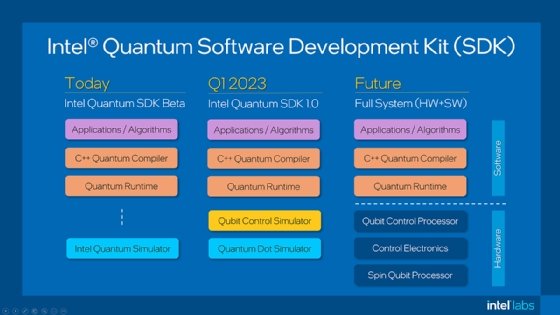
Unlocking the Quantum Frontier: A Deep Dive into Quantum Computing Software Development Kits
In the rapidly evolving landscape of quantum technology, quantum computing software development kits (SDKs) stand as the indispensable bridge between theoretical quantum mechanics and practical application. These powerful toolkits empower developers, researchers, and enterprises to design, simulate, and execute quantum algorithms on diverse quantum hardware platforms, democratizing access to this revolutionary computational paradigm. If you're looking to delve into the intricate world of quantum programming, understanding and utilizing these sophisticated quantum SDKs is not just beneficial, but absolutely essential for accelerating innovation and exploring the true potential of quantum solutions.
The Indispensable Role of Quantum Computing SDKs in Modern Development
At its core, a quantum computing SDK is a collection of software tools, libraries, and APIs that enable developers to build and interact with quantum programs. Unlike classical software development, quantum programming operates on principles like superposition, entanglement, and quantum interference, which require specialized frameworks to manage. These SDKs abstract away much of the underlying complexity of quantum hardware, allowing developers to focus on algorithm design and application logic rather than low-level quantum gate operations or hardware specifics.
Think of them as the compilers and integrated development environments (IDEs) of the quantum world. They provide the necessary interfaces to define quantum circuits, manipulate qubits, simulate quantum processes on classical computers, and ultimately, send these quantum programs to actual quantum processors (QPUs) via cloud services. This seamless integration is critical for fostering a vibrant quantum software ecosystem and pushing the boundaries of what's computationally possible.
Key Components and Features of Leading Quantum SDKs
A robust quantum SDK typically includes several core components designed to facilitate the entire development lifecycle:
- Quantum Circuit Builders: Graphical or programmatic interfaces to construct quantum circuits by applying quantum gates to qubits. This is where you define the quantum operations.
- Quantum Simulators: Tools that allow developers to test and debug quantum programs on classical computers, simulating the behavior of a quantum computer. This is crucial for early-stage development and understanding algorithm behavior without access to expensive quantum hardware.
- Quantum Compilers: Software that translates high-level quantum code into the specific native gate set and architecture requirements of a target QPU. This ensures compatibility and optimal performance.
- Quantum Libraries: Collections of pre-built quantum algorithms, functions, and modules for common tasks, such as quantum Fourier transforms, quantum machine learning routines, or optimization algorithms. These libraries significantly speed up development.
- API Connectors: Interfaces to connect to various cloud-based quantum computing platforms, allowing users to submit their quantum programs to remote QPUs.
- Debugging Tools: Features to inspect quantum states, visualize circuit execution, and identify errors in quantum programs. Given the probabilistic nature of quantum mechanics, debugging can be particularly challenging, making these tools invaluable.
Navigating the Landscape: Prominent Quantum Computing SDKs
The quantum software landscape is dynamic, with several major players offering their own comprehensive quantum development kits. Each comes with unique strengths, programming paradigms, and community support.
IBM Qiskit: The Open-Source Powerhouse
IBM's Qiskit is arguably the most widely adopted open-source quantum SDK. Written primarily in Python, Qiskit provides a rich framework for creating, running, and analyzing quantum programs. Its modular structure includes:
- Terra: The foundational layer for building quantum circuits.
- Aer: High-performance quantum simulators.
- Ignis: Tools for quantum hardware characterization and error mitigation.
- Aqua: Libraries for quantum machine learning, optimization, and chemistry applications.
Qiskit's extensive documentation, vibrant community, and direct access to IBM's quantum hardware via the IBM Quantum Experience make it an excellent choice for beginners and experienced quantum developers alike. It's particularly strong for those interested in hybrid quantum-classical computing.
Google Cirq: Building for NISQ Era
Google's Cirq is another Python-based quantum programming framework designed for creating, editing, and invoking quantum circuits. Cirq is particularly focused on programming NISQ (Noisy Intermediate-Scale Quantum) devices, emphasizing precise control over quantum operations and physical hardware characteristics. It offers a more granular level of control, which can be beneficial for researchers pushing the boundaries of quantum algorithms and low-level optimization.
Microsoft QDK with Q#: A Language-Centric Approach
Microsoft's Quantum Development Kit (QDK) stands out with its dedicated quantum programming language, Q#. Qis a high-level, domain-specific language that integrates seamlessly with classical languages like Python and C#. The QDK includes powerful simulators, debuggers, and libraries for quantum chemistry and optimization. Its strong type system and integrated development environment (Visual Studio Code extension) provide a robust and familiar experience for software engineers transitioning from classical programming.
Amazon Braket SDK: Cloud-Agnostic Access
Amazon Braket is a fully managed quantum computing service that provides a unified development environment. Its SDK allows developers to access various QPUs from different providers (e.g., IonQ, Rigetti, QuEra) using a consistent interface. The Amazon Braket SDK is Python-based and supports frameworks like PennyLane and OpenQASM, making it highly flexible for developers who want to experiment with different hardware architectures without committing to a single vendor's SDK.
Other Notable Quantum Development Tools
- PennyLane: A quantum machine learning library that integrates with various quantum SDKs (Qiskit, Cirq, QDK) and classical ML frameworks (PyTorch, TensorFlow). It's excellent for variational quantum algorithms.
- Rigetti Forest: Rigetti's SDK for their quantum processors, offering Python-based tools for quantum programming.
- Tequila: A quantum algorithm development library that focuses on abstracting away the low-level details of quantum frameworks, allowing for rapid prototyping of quantum algorithms.
Actionable Benefits of Leveraging Quantum SDKs for Developers
The adoption of quantum computing SDKs offers a multitude of advantages for anyone looking to enter or advance in the quantum space:
- Accelerated Development: Pre-built functions, simulators, and clear APIs significantly reduce the time and effort required to develop quantum applications. You don't need to be a quantum physicist to start coding.
- Accessibility to Quantum Hardware: SDKs provide the essential gateway to remote quantum processors, allowing developers to run their code on real QPUs without needing direct physical access or deep hardware expertise.
- Abstraction of Complexity: They handle the intricate details of quantum mechanics and hardware-specific instructions, allowing developers to focus on the logical flow and algorithmic design.
- Facilitates Research and Experimentation: The ability to quickly prototype, simulate, and test various quantum algorithms is crucial for academic research and industrial R&D.
- Community and Ecosystem Support: Popular SDKs like Qiskit boast large, active communities, providing forums, tutorials, and shared resources that are invaluable for learning and troubleshooting.
- Future-Proofing Skills: As quantum computing matures, proficiency with these SDKs will become a critical skill for a new generation of software engineers and quantum scientists.
Overcoming Challenges: How SDKs Streamline Quantum Development
Despite their immense potential, quantum computers present unique development challenges. Quantum SDKs are designed to mitigate many of these difficulties:
- Quantum Noise and Error Correction: Current QPUs are noisy. SDKs often include features for error mitigation techniques and allow for the integration of classical post-processing to reduce the impact of errors.
- Debugging Quantum Programs: The probabilistic nature of quantum mechanics makes traditional debugging difficult. SDKs offer specialized simulators and visualization tools to inspect quantum states and probability distributions, aiding in debugging.
- Resource Management: Quantum computers have limited qubits and coherence times. SDKs help optimize quantum circuits for specific hardware constraints and manage the submission queue for cloud QPUs.
- Interoperability: As more hardware vendors emerge, ensuring quantum programs can run on different architectures is key. Some SDKs and intermediate representations (like OpenQASM) aim to provide a level of hardware agnosticism.
For aspiring quantum developers, choosing the right quantum development tools and understanding their capabilities is paramount. It's often beneficial to explore multiple SDKs to appreciate their distinct approaches and find what best suits your project needs or learning style. Consider starting with an open-source, well-documented option like Qiskit to build a strong foundation.
Practical Applications and Emerging Use Cases Enabled by SDKs
The development facilitated by quantum computing software development kits is paving the way for breakthroughs across various sectors:
- Drug Discovery and Materials Science: Simulating molecular interactions at the quantum level to discover new drugs or design novel materials with specific properties (e.g., high-temperature superconductors).
- Financial Modeling: Optimizing portfolios, pricing complex derivatives, and detecting fraud with greater accuracy and speed than classical methods.
- Optimization Problems: Solving complex logistical challenges, such as supply chain optimization, traffic flow management, or vehicle routing, which are intractable for classical computers.
- Artificial Intelligence and Machine Learning: Developing quantum machine learning algorithms for pattern recognition, data classification, and generative models, potentially leading to more powerful AI.
- Cryptography: Creating new quantum-resistant cryptographic methods or breaking existing ones, necessitating a complete re-evaluation of cybersecurity.
Each of these applications relies heavily on the ability to translate abstract quantum algorithms into executable code, a task made possible and efficient by the sophisticated features of modern quantum SDKs.
Best Practices for Effective Quantum Software Development with SDKs
To maximize your success in quantum application development, consider these best practices:
- Start with Simulators: Always develop and debug your quantum circuits on simulators first. This saves valuable quantum processing unit (QPU) time and allows for faster iteration.
- Understand Your Hardware: While SDKs abstract complexity, a basic understanding of the target QPU's architecture (qubit connectivity, native gate set) can help optimize your circuits for better performance and fidelity.
- Modularize Your Code: Break down complex quantum algorithms into smaller, reusable quantum subroutines or functions. This improves readability, maintainability, and reusability.
- Leverage Libraries: Don't reinvent the wheel. Utilize the pre-built quantum algorithms and functions available in the SDK's libraries (e.g., Qiskit Aqua, PennyLane).
- Implement Error Mitigation: Actively explore and implement error mitigation techniques provided by the SDKs (e.g., measurement error mitigation, dynamical decoupling) to improve the accuracy of results on noisy hardware.
- Test Thoroughly: Quantum programs can be subtle. Use the debugging tools provided by the SDKs to inspect intermediate states and ensure your circuit behaves as expected.
- Stay Updated: The field of quantum computing is rapidly evolving. Keep your SDKs updated to access the latest features, bug fixes, and hardware integrations.
- Engage with the Community: Participate in forums, contribute to open-source projects, and attend workshops. The collective knowledge of the quantum community is an invaluable resource.
By adhering to these guidelines, developers can navigate the complexities of quantum programming more effectively and contribute meaningfully to the advancement of quantum technology. The future of quantum software is being built, line by line, through the powerful interfaces provided by these SDKs.
Frequently Asked Questions
What is the primary purpose of a quantum computing SDK?
The primary purpose of a quantum computing SDK is to provide developers with a high-level, user-friendly interface to design, simulate, and execute quantum algorithms. It abstracts the low-level details of quantum hardware, allowing programmers to focus on building quantum applications using familiar programming paradigms, typically Python. This accelerates quantum software development and makes quantum computing more accessible.
Which quantum programming languages are commonly supported by SDKs?
While many quantum SDKs are primarily accessed via Python APIs (e.g., Qiskit, Cirq, Amazon Braket SDK), some also introduce their own domain-specific languages. The most notable is Microsoft's Q#, which is a dedicated quantum programming language within their Quantum Development Kit. Additionally, OpenQASM (Open Quantum Assembly Language) serves as an intermediate representation often used by SDKs to describe quantum circuits for various hardware platforms, enabling a degree of interoperability.
Can I run quantum programs on real quantum hardware using an SDK?
Absolutely. One of the most significant features of modern quantum computing software development kits is their ability to connect to real quantum hardware, typically via cloud-based services. SDKs like IBM Qiskit allow direct submission to IBM's quantum processors, while Amazon Braket's SDK provides access to multiple vendors' QPUs (e.g., IonQ, Rigetti, QuEra). Developers can write and test their quantum algorithms on simulators, and then, with a few lines of code, deploy them to actual quantum computers to observe their performance.
What is the difference between a quantum simulator and a real quantum computer in the context of SDKs?
A quantum simulator, typically included within an SDK, is a classical computer program that mimics the behavior of a quantum computer. It's used for testing and debugging quantum programs without the need for expensive quantum hardware. Simulators are limited by classical computational resources (RAM, CPU) and can only simulate a small number of qubits (typically up to ~40). A real quantum computer, on the other hand, is a physical device that leverages quantum mechanical phenomena to perform computations. While more powerful for complex problems, real QPUs are currently noisy, prone to errors, and have limited coherence times. SDKs allow seamless switching between these two execution environments.
How do quantum SDKs facilitate hybrid quantum-classical computing?
Quantum SDKs are crucial for enabling hybrid quantum-classical computing, which combines the strengths of both classical and quantum processors. They provide the necessary interfaces to define quantum subroutines that run on QPUs and integrate them within a larger classical program flow. For instance, an SDK might allow a classical optimization algorithm to iteratively call a quantum subroutine for a specific part of the problem. Libraries within SDKs, such as Qiskit's optimization module or PennyLane for quantum machine learning, are specifically designed to facilitate these hybrid workflows, managing data transfer and result interpretation between the two computational paradigms.

0 Komentar