
The Transformative Power of 5G Network Slicing for Healthcare Applications
The landscape of modern medicine is undergoing a profound transformation, driven by advancements in digital technology. At the forefront of this revolution is 5G network slicing for healthcare applications, a groundbreaking capability that promises to redefine patient care, medical diagnostics, and operational efficiency. This innovative technology allows for the creation of dedicated, isolated virtual networks atop a shared 5G infrastructure, each tailored to the unique demands of specific healthcare use cases. Imagine ultra-reliable, high-bandwidth channels for critical surgical procedures or low-latency pathways for remote patient monitoring – network slicing makes these previously futuristic concepts a tangible reality, unlocking unprecedented potential for the digital health ecosystem.
Understanding 5G Network Slicing: A Paradigm Shift for Connectivity
To truly grasp the immense potential of 5G network slicing in healthcare, it's essential to understand its core mechanics. Unlike previous generations of mobile networks that offered a "one-size-fits-all" approach to connectivity, 5G introduces the revolutionary concept of network slicing. This means a single physical 5G infrastructure can host multiple logical, independent, and isolated virtual networks, each with its own optimized resources and performance characteristics. Think of it like a highway that can dynamically create dedicated lanes for ambulances, freight trucks, and passenger cars, each with specific speed limits and traffic management protocols.
What is Network Slicing?
At its heart, network slicing leverages software-defined networking (SDN) and network function virtualization (NFV) to dynamically allocate network resources. Each "slice" is a self-contained, end-to-end network that can be customized for specific service level agreements (SLAs) regarding bandwidth, latency, reliability, and security. For healthcare, this is particularly critical because different medical applications have vastly different connectivity requirements. A high-definition video consultation needs high bandwidth, while remote surgery demands ultra-low latency and extreme reliability. Network slicing provides this granular control and dedicated performance.
Key Characteristics for Healthcare
- Dedicated Resources: Each healthcare application receives its own dedicated portion of network resources, preventing congestion or interference from other network traffic. This ensures consistent performance for critical medical data.
- Isolation: Slices are logically isolated from one another, enhancing security and privacy. This is paramount for handling sensitive patient information and ensuring the integrity of medical device communications.
- Dynamic Allocation: Resources can be dynamically adjusted and allocated on demand, allowing healthcare providers to scale their network capabilities rapidly in response to changing needs, such as during emergencies or peak usage times.
- Guaranteed Quality of Service (QoS): Unlike best-effort networks, 5G slices can guarantee specific levels of latency, bandwidth, and reliability, which are non-negotiable for life-critical healthcare applications.
Revolutionizing Healthcare Delivery with Sliced Networks
The implications of 5G network slicing for healthcare applications are far-reaching, promising to transform every facet of medical service delivery. From enhancing existing practices to enabling entirely new paradigms of care, the capabilities unlocked by dedicated network slices are truly game-changing. This is where the theoretical power of 5G translates into tangible improvements for patients and providers alike.
Enhancing Telemedicine and Remote Patient Care
Telemedicine has seen exponential growth, but its full potential has been hampered by inconsistent network performance. 5G network slicing addresses these limitations by providing dedicated, high-quality channels for virtual consultations and remote monitoring. Imagine:
- HD Video Consultations: Flawless, high-definition video and audio for virtual doctor visits, allowing for clearer visual examinations and more effective communication, even in rural or underserved areas.
- Remote Diagnostics: Real-time transmission of large medical images (e.g., MRI, CT scans) and video from remote diagnostic tools to specialists for immediate analysis, significantly reducing diagnosis times.
- Continuous Patient Monitoring: Reliable connectivity for wearable medical devices and home-based IoT sensors, transmitting vital signs and health metrics continuously to healthcare providers. This enables proactive intervention and reduces hospital readmissions.
Powering Precision Medicine and IoT Medical Devices
Precision medicine relies heavily on vast amounts of data – from genomic sequencing to real-time physiological readings. 5G network slicing provides the robust backbone necessary for this data-intensive field. It facilitates:
- Real-time Data Aggregation: Seamless collection and transmission of data from thousands of IoT medical devices, allowing for comprehensive patient profiles and predictive analytics.
- AI-Driven Insights: The rapid transfer of data to cloud-based AI platforms for instantaneous analysis, aiding in disease prediction, personalized treatment plans, and drug discovery.
- Personalized Treatment Plans: Enabling the dynamic adjustment of therapies based on real-time patient responses, as data flows instantly between monitoring devices and healthcare systems.
Facilitating Advanced Surgical Procedures and Robotics
Perhaps one of the most exciting, yet demanding, applications is in surgical robotics and remote surgery. The need for ultra-low latency and extreme reliability here is non-negotiable, making 5G network slicing an indispensable enabler:
- Ultra-Low Latency for Control: Critical for precise control of surgical robots, minimizing the delay between a surgeon's command and the robot's action to mere milliseconds, essential for intricate procedures.
- Haptic Feedback: Enabling realistic haptic feedback for surgeons operating remotely, allowing them to "feel" tissue resistance and texture, crucial for delicate manipulations.
- Remote Surgery: The potential for surgeons to perform operations on patients located hundreds or thousands of miles away, addressing specialist shortages and improving access to complex procedures globally.
Bolstering Emergency Services and Critical Communications
In emergency situations, every second counts. 5G network slicing can provide dedicated, prioritized communication channels for first responders, ambulances, and emergency rooms:
- Prioritized Communication: Ensuring emergency services have guaranteed access to network resources, even in congested areas, for critical voice, video, and data transmission.
- Real-time Data Sharing: Transmitting patient data, vital signs, and even live video from ambulances to hospitals en route, allowing medical staff to prepare for arrival and begin treatment immediately.
- Ambulance Connectivity: Turning ambulances into mobile emergency rooms, equipped with advanced diagnostic tools that can transmit data reliably over a dedicated slice.
Enabling AR/VR for Medical Training and Therapy
Augmented Reality (AR) and Virtual Reality (VR) are set to revolutionize medical education and therapy. 5G network slicing provides the high bandwidth and low latency needed for immersive AR/VR experiences:
- Immersive Training: Surgeons and medical students can perform virtual operations with realistic haptic feedback, simulating complex scenarios without risk.
- Surgical Simulation: Realistic simulations for training new procedures, allowing repeated practice and skill refinement in a risk-free environment.
- Rehabilitation and Therapy: Engaging VR environments for physical therapy and mental health treatment, delivered remotely with guaranteed performance.
The Critical Advantages: Why 5G Slicing is Indispensable for Healthcare
The unique attributes of 5G network slicing offer unparalleled advantages that are simply not achievable with traditional network architectures. These benefits directly address long-standing challenges in healthcare, paving the way for a more efficient, accessible, and high-quality system.
Unprecedented Reliability and Quality of Service (QoS)
For life-critical applications, network reliability is paramount. A dedicated slice can be configured to offer 99.999% reliability, ensuring that critical data transmission for patient monitoring, remote surgery, or emergency communications is never interrupted. This guaranteed quality of service is a cornerstone for building trust in digital health solutions.
Ultra-Low Latency for Real-Time Applications
Latency, the delay in data transmission, can be a matter of life or death in healthcare. 5G network slicing can reduce latency to as low as 1 millisecond, crucial for applications like remote surgery where immediate feedback is required. This minimal delay enables real-time responsiveness for robotic controls, haptic feedback systems, and instantaneous data processing for AI-driven diagnostics.
Enhanced Security and Data Isolation
Healthcare data is among the most sensitive information. Network slicing provides inherent security benefits by logically isolating different services. A slice dedicated to patient health records will be completely separate from a slice used for hospital administration, significantly reducing the attack surface and enhancing data privacy. This data isolation is a powerful defense against cyber threats and a key enabler for HIPAA compliance.
Scalability and Dynamic Resource Allocation
Healthcare needs can fluctuate dramatically, from routine consultations to mass casualty events. 5G network slicing allows for immediate and dynamic scaling of network resources. A hospital can instantly provision a new, high-bandwidth slice for a sudden influx of patients requiring remote monitoring or allocate more resources to an emergency room's communication slice during a crisis, ensuring optimal performance when it's most needed.
Overcoming Challenges and Ensuring Successful Implementation
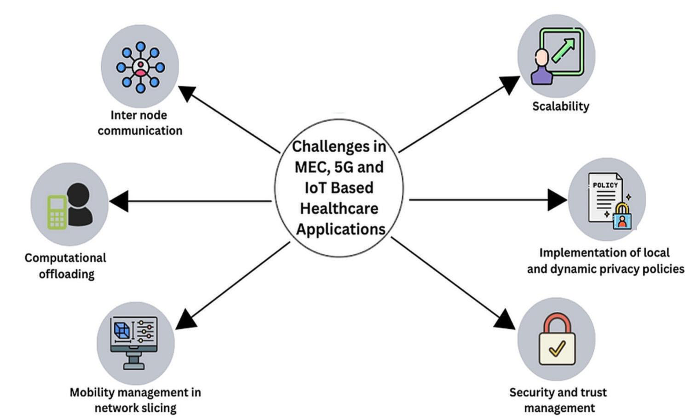
While the promise of 5G network slicing for healthcare applications is immense, its successful implementation requires careful consideration of several challenges. Addressing these proactively will be crucial for realizing its full potential.
Addressing Security and Data Privacy Concerns
Despite the inherent isolation benefits, the convergence of medical devices, patient data, and diverse network slices introduces new security complexities. Robust encryption, stringent access controls, and continuous monitoring will be essential. Healthcare organizations must work closely with network providers to establish comprehensive security protocols and ensure compliance with regulations like HIPAA and GDPR. Regular security audits and penetration testing are vital for maintaining a secure environment.
Interoperability and Ecosystem Collaboration
The healthcare ecosystem is vast and fragmented, involving hospitals, clinics, device manufacturers, software developers, and network operators. Ensuring seamless interoperability between different systems, devices, and network slices will be a significant undertaking. Standardized APIs and collaborative frameworks are needed to allow various healthcare applications to leverage 5G slices effectively. Partnerships between telecom companies and healthcare providers will be key to developing tailored solutions.
Regulatory Compliance and Ethical Considerations
The deployment of advanced technologies like remote surgery raises complex regulatory and ethical questions. Who is liable in case of an error during a remote procedure? How will patient consent be managed for data transmitted over dedicated slices? Governments and regulatory bodies need to establish clear guidelines and frameworks that keep pace with technological advancements, ensuring patient safety and ethical practice. The legal implications of cross-border remote care also need careful consideration.
Investment and Infrastructure Development
Deploying a full-fledged 5G infrastructure capable of supporting advanced network slicing requires substantial investment in new hardware, software, and skilled personnel. Healthcare organizations will need to assess the return on investment and develop long-term strategies for adopting and integrating this technology. Government funding, public-private partnerships, and innovative financing models may be necessary to accelerate widespread adoption, particularly in underserved regions.
Practical Applications and Future Outlook
The future of healthcare is undeniably connected, and 5G network slicing is the critical enabler for this transformation. Healthcare providers are already exploring pilot programs and real-world deployments that showcase its power.
Implementing Slices for Specific Use Cases
Consider a major hospital creating distinct 5G network slices:
- The "Critical Care Slice": Dedicated for emergency services, remote ICU monitoring, and robotic surgery, prioritizing ultra-low latency and maximum reliability.
- The "Patient Monitoring Slice": For continuous monitoring of outpatients via wearables and home IoT devices, requiring consistent bandwidth and secure data transfer.
- The "Hospital Operations Slice": Supporting administrative tasks, inventory management, and non-critical communications, optimized for efficiency and cost-effectiveness.
Each slice operates independently, guaranteeing performance for its specific function without impacting others. This level of granular control is unprecedented and directly translates into improved patient outcomes and operational efficiency.
Actionable Steps for Healthcare Providers
- Assess Current Needs: Identify critical applications that would benefit most from dedicated, high-performance network connectivity (e.g., telemedicine expansion, remote diagnostics).
- Collaborate with Telecom Providers: Engage early with 5G network operators to understand their slicing capabilities and discuss tailored solutions for specific healthcare requirements.
- Pilot Programs: Start with small-scale pilot projects to test the efficacy of 5G network slicing for specific use cases before widespread deployment. This allows for fine-tuning and risk mitigation.
- Invest in Training: Prepare IT staff and medical professionals for the new capabilities and operational models that 5G network slicing will enable.
- Prioritize Security & Compliance: Integrate cybersecurity experts from the outset to design and implement robust security frameworks that comply with all relevant healthcare regulations.
Frequently Asked Questions
What is 5G network slicing?
5G network slicing is a core capability of 5G technology that allows a single physical network infrastructure to be logically divided into multiple independent, virtual networks, known as "slices." Each slice can be customized with specific performance characteristics like bandwidth, latency, and security, tailored to the unique requirements of different applications or services. This enables dedicated, optimized connectivity for specific use cases like remote surgery or real-time patient monitoring in healthcare.
How does 5G network slicing benefit remote surgery?
5G network slicing benefits remote surgery by providing the critical ultra-low latency and high reliability required for precise control of robotic surgical instruments. A dedicated network slice ensures that the surgeon's commands are transmitted to the robot with minimal delay (often less than 1 millisecond), and haptic feedback is returned instantaneously. This virtually eliminates lag, making remote operations as responsive and safe as in-person procedures, thus expanding access to specialized surgical expertise globally.
What are the security implications of 5G network slicing in healthcare?
While 5G network slicing offers enhanced security through inherent logical isolation, meaning one slice's data cannot easily interfere with another's, healthcare organizations must still implement robust cybersecurity measures. The isolation helps prevent unauthorized access between different types of medical data or services. However, end-to-end encryption, strong authentication protocols, strict access controls, and continuous monitoring are vital to protect sensitive patient information within each slice and ensure compliance with data privacy regulations like HIPAA.
Can 5G network slicing improve emergency medical services?
Yes, 5G network slicing can significantly improve emergency medical services by providing dedicated, prioritized communication channels for first responders. This ensures that ambulance crews can transmit real-time patient data, vital signs, and live video feeds to hospitals en route without network congestion, even during mass casualty events. It enables proactive preparation by hospital staff and allows for immediate medical guidance from specialists, effectively turning ambulances into connected, mobile emergency rooms.
What steps should healthcare organizations take to adopt 5G network slicing?
To adopt 5G network slicing, healthcare organizations should first conduct a thorough needs assessment to identify which applications would benefit most. Then, it's crucial to collaborate closely with telecom providers to design custom slices that meet specific performance and security requirements. Starting with pilot programs for specific use cases, investing in staff training, and prioritizing robust cybersecurity and regulatory compliance from the outset are essential practical steps for a successful transition.

0 Komentar