
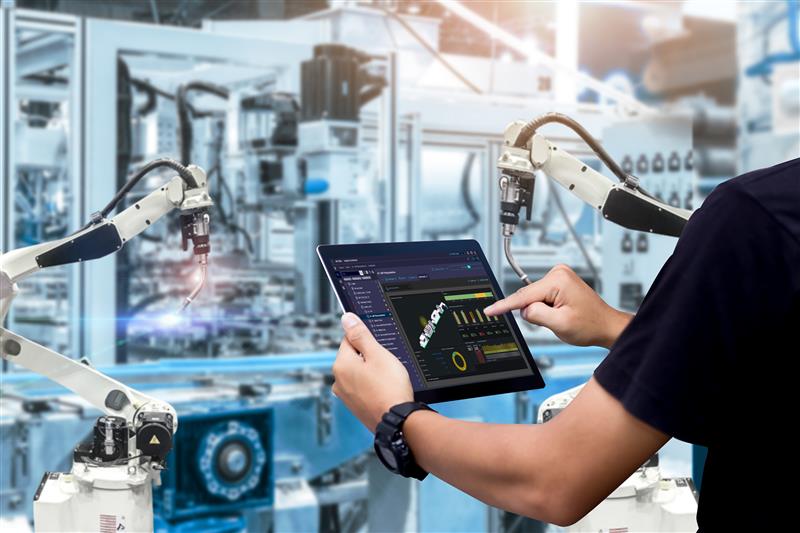
The Future of AI-Enhanced Robotic Automation: Boosting Manufacturing and Supply Chain Productivity by 2025
The manufacturing landscape is on the cusp of a profound transformation, driven by the synergistic power of AI-enhanced robotic automation. As we approach 2025, industries are rapidly adopting these advanced technologies to revolutionize production processes, achieve unparalleled supply chain optimization, and significantly boost overall productivity. This isn't merely an incremental upgrade; it's a paradigm shift towards intelligent, autonomous operations that promise unprecedented efficiency, resilience, and competitive advantage. Prepare to discover how artificial intelligence and cutting-edge robotics are shaping the next generation of industrial capabilities, making factories smarter and supply chains more agile than ever before.
Revolutionizing Manufacturing Processes with Intelligent Automation
The integration of AI into robotic systems is elevating automation beyond repetitive tasks, enabling machines to learn, adapt, and make informed decisions. This evolution is giving rise to smart factories where every element, from raw materials to finished products, is monitored and optimized in real-time. The goal is clear: achieve maximum operational efficiency and production optimization.
Cognitive Robotics and Adaptive Production
- Enhanced Precision and Quality Control: AI algorithms empower robots to perform tasks with superhuman precision, identifying and correcting defects in real-time. This leads to a dramatic reduction in waste and rework, significantly improving product quality. Machine vision systems, powered by deep learning, can inspect components at speeds and accuracies impossible for human operators.
- Flexible Manufacturing and Mass Customization: Traditional production lines struggle with variability. However, AI-enhanced robots can rapidly reconfigure their operations to accommodate different product variants or even mass customization. Their ability to learn from new data allows for quick adaptation to changing demands, offering unparalleled agility.
- Predictive Maintenance and Uptime Maximization: Leveraging data analytics and machine learning, AI systems can predict equipment failures before they occur. Robots equipped with sensors constantly feed data into these systems, allowing for proactive maintenance scheduling. This minimizes downtime, extends machinery lifespan, and ensures continuous production flow.
- Human-Robot Collaboration (Cobots): The future isn't just about fully autonomous systems; it's also about intelligent collaboration. Cobots work safely alongside human operators, taking on physically demanding or repetitive tasks, while humans focus on complex problem-solving, quality assurance, and creative work. This symbiosis enhances productivity and improves workplace safety.
Transforming Supply Chain Optimization Through AI and Robotics
Beyond the factory floor, the impact of AI-enhanced robotic automation extends deeply into the supply chain, creating a highly interconnected and responsive network. From warehousing to last-mile delivery, these technologies are addressing long-standing inefficiencies and fostering unprecedented logistics automation.
Intelligent Warehousing and Inventory Management
Warehouses are becoming epicenters of automation, driven by advanced robotics and AI. Autonomous mobile robots (AMRs) navigate complex environments to pick, sort, and transport goods, drastically reducing labor costs and speeding up order fulfillment. AI algorithms optimize storage layouts, predict demand fluctuations, and manage inventory levels with remarkable accuracy, minimizing stockouts and overstocking.
- Automated Storage and Retrieval Systems (AS/RS): These systems, often integrated with AI, efficiently manage dense storage, retrieving items with precision and speed, reducing human error and improving space utilization.
- AI-Driven Demand Forecasting: Machine learning models analyze vast datasets – historical sales, weather patterns, economic indicators, social media trends – to generate highly accurate demand forecasts. This enables proactive inventory management and optimized production scheduling, directly impacting supply chain resilience.
- Dynamic Routing and Fleet Management: For logistics, AI optimizes delivery routes in real-time, considering traffic, weather, and delivery priorities. Autonomous vehicles and drones, managed by AI, are poised to revolutionize freight and last-mile delivery, offering faster, more efficient, and potentially more sustainable transportation solutions.
Enhanced Visibility and Decision-Making
One of the most significant contributions of AI to supply chain management is the creation of unparalleled visibility. By integrating data from sensors, ERP systems, IoT devices, and external sources, AI platforms can construct a comprehensive, real-time digital twin of the entire supply chain. This holistic view enables proactive decision-making and rapid response to disruptions.
For instance, an AI system can detect a potential delay in a shipment due to adverse weather, automatically reroute it, and notify all affected stakeholders, minimizing impact on downstream processes. This level of real-time data analytics is critical for maintaining competitive advantage.
Achieving Unprecedented Productivity Gains by 2025
The convergence of AI and robotics is not just about making processes faster; it's about fundamentally rethinking how work is done to unlock exponential productivity gains. This involves not only automating physical tasks but also optimizing cognitive processes.
Key Drivers of Productivity Boost
- Cost Reduction: Automation reduces labor costs, energy consumption through optimized processes, and waste due to increased precision. The long-term operational savings are substantial.
- Increased Throughput and Speed: Robots can operate 24/7 without fatigue, performing tasks at consistent speeds far exceeding human capabilities. This dramatically increases production capacity.
- Improved Quality and Reduced Errors: AI-powered vision systems and robotic precision virtually eliminate human error in repetitive tasks, leading to higher quality products and fewer recalls.
- Enhanced Agility and Responsiveness: The ability of AI to rapidly analyze data and direct robotic actions allows manufacturers to respond quickly to market changes, supply chain disruptions, or new product demands. This agility is a significant competitive differentiator.
- Better Resource Utilization: AI optimizes the use of raw materials, energy, and machinery, leading to more sustainable and cost-effective operations. For example, optimization algorithms can determine the most efficient cutting patterns for materials, minimizing scrap.
Strategic Imperatives for Adoption
For organizations looking to capitalize on this future, a strategic approach is paramount. It's not just about buying robots; it's about integrating them intelligently within an existing ecosystem and fostering a culture of innovation.
- Invest in Data Infrastructure: Robust data collection, storage, and processing capabilities are the bedrock of any AI initiative. Without high-quality data, AI models cannot learn effectively.
- Develop a Digital Twin Strategy: Creating a virtual replica of your manufacturing process and supply chain allows for simulation, optimization, and predictive analysis before physical implementation. This can significantly de-risk new automation deployments.
- Upskill the Workforce: As robots take over repetitive tasks, human workers will need to transition to roles focused on robot supervision, AI system management, data analysis, and creative problem-solving. Training programs for these new skills are crucial.
- Prioritize Cybersecurity: An interconnected smart factory is also a more vulnerable one. Robust cybersecurity measures are essential to protect intellectual property, operational data, and ensure system integrity.
- Start Small, Scale Big: Begin with pilot projects to test AI and robotic solutions in specific areas, gather data, and refine processes before scaling across the entire operation. This iterative approach minimizes risk and maximizes learning.
Discover how your organization can leverage these advancements to stay ahead. [Explore our tailored automation solutions here].
Advanced Insights: The Interplay of AI, IoT, and Digital Twins
The true power of AI-enhanced robotic automation by 2025 lies in its seamless integration with other Industry 4.0 technologies, particularly the Internet of Things (IoT) and digital twins. IoT sensors embedded throughout the manufacturing floor and supply chain collect vast amounts of real-time data – temperature, pressure, vibration, location, performance metrics. This data feeds directly into AI systems.
AI then processes this raw data, identifies patterns, predicts outcomes, and makes decisions. These decisions can then be executed by robotic systems. A digital twin acts as a virtual replica of a physical asset, process, or even an entire factory or supply chain. AI uses data from IoT sensors to keep the digital twin updated in real-time. This allows for:
- Simulation and Optimization: Companies can run "what-if" scenarios on the digital twin without disrupting physical operations, testing new production layouts, supply chain routes, or robotic work cells to identify optimal configurations.
- Predictive Analytics: The digital twin, fed by AI, can predict equipment failures, supply chain bottlenecks, or quality issues, allowing for proactive intervention.
- Remote Monitoring and Control: Operators can monitor and even control physical assets through their digital twins, enhancing responsiveness and efficiency, especially in complex global supply chains.
This synergistic ecosystem creates a closed-loop system of continuous improvement, where data drives intelligence, intelligence drives automation, and automation drives unparalleled productivity and operational efficiency.
Practical Implementation Strategies for 2025 Readiness
To successfully navigate the rapid evolution of AI-enhanced robotic automation, manufacturers and supply chain leaders need actionable strategies. The shift requires more than just technological adoption; it demands a fundamental re-evaluation of business models and operational philosophies.
- Conduct a Comprehensive Automation Audit: Identify areas in your manufacturing processes and supply chain where automation can yield the highest ROI. Look for repetitive tasks, high-error areas, bottlenecks, and safety hazards. Prioritize based on potential impact on productivity and cost savings.
- Develop an AI Strategy Aligned with Business Goals: Don't implement AI for AI's sake. Define clear business objectives – whether it's reducing lead times, improving quality, increasing throughput, or enhancing supply chain visibility – and then select AI solutions that directly support these goals.
- Invest in Data Governance and Infrastructure: Ensure your data is clean, accessible, and integrated across various systems. This means investing in robust data lakes, cloud infrastructure, and data visualization tools that can support AI and machine learning initiatives.
- Cultivate a Culture of Innovation and Continuous Learning: Encourage employees to experiment with new technologies and embrace change. Provide training and reskilling opportunities to prepare the workforce for new roles in an automated environment. Human-robot collaboration requires a new mindset.
- Establish Cross-Functional Teams: Successful AI and robotics integration requires collaboration between IT, operations, engineering, and even HR departments. Break down silos to ensure a holistic approach.
- Partner with Technology Experts: Given the complexity of these technologies, consider partnering with specialized vendors or consultants who can provide expertise in AI development, robotics integration, and smart factory solutions.
These best practices will pave the way for a smoother transition into the highly automated and intelligent future of manufacturing and supply chain management.
Frequently Asked Questions
How will AI and robotics transform manufacturing by 2025?
By 2025, AI and robotics will transform manufacturing by enabling highly autonomous, self-optimizing smart factories. This will lead to unprecedented levels of precision, flexibility, and efficiency. Key transformations include widespread adoption of cognitive robots for complex tasks, AI-driven predictive maintenance eliminating downtime, real-time quality control, and the seamless integration of human-robot collaboration for enhanced productivity and safety. Manufacturers will experience significant cost reductions, increased throughput, and the ability to offer mass customization.
What are the key benefits of AI-enhanced automation in the supply chain?
AI-enhanced automation in the supply chain offers numerous benefits, including superior supply chain optimization, improved visibility, and enhanced resilience. It enables intelligent warehousing with autonomous mobile robots for faster fulfillment, AI-driven demand forecasting for precise inventory management, and dynamic routing for efficient logistics. The ability to analyze real-time data allows for proactive decision-making, minimizing disruptions and significantly boosting overall operational efficiency and responsiveness.
How can businesses prepare for the future of robotic automation?
To prepare for the future of robotic automation, businesses should focus on several key areas. Firstly, invest in a robust data infrastructure and governance to support AI initiatives. Secondly, prioritize workforce upskilling and reskilling to prepare employees for new roles in managing and collaborating with automated systems. Thirdly, develop a clear AI and automation strategy aligned with business objectives, perhaps starting with pilot projects. Lastly, ensure strong cybersecurity measures are in place to protect interconnected systems within the Industry 4.0 landscape.
What is the role of human-robot collaboration in future factories?
In future factories, human-robot collaboration (cobots) will play a crucial role, moving beyond simple automation to a symbiotic partnership. Cobots will handle repetitive, dangerous, or physically demanding tasks, freeing human workers to focus on higher-value activities such as complex problem-solving, quality assurance, creative design, and system oversight. This collaboration enhances safety, improves ergonomic conditions, and leverages the unique strengths of both humans and machines, ultimately boosting overall production optimization and employee satisfaction.

0 Komentar