
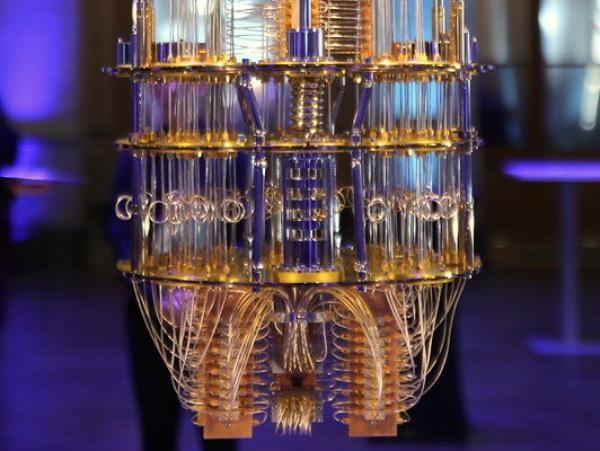
Safeguarding Data Privacy in the Quantum Era: Understanding the Quantum Computing Impact
The dawn of quantum computing heralds a technological revolution, promising unprecedented computational power to solve problems currently deemed intractable for even the most advanced supercomputers. While this innovation offers immense potential across fields like medicine, materials science, and artificial intelligence, it simultaneously casts a long shadow over one of our most fundamental digital concerns: data privacy. As a professional SEO expert deeply immersed in the nuances of digital security, it's critical to illuminate how quantum computing impact on data privacy is not merely a theoretical future threat but an urgent call to action for every organization and individual relying on modern encryption standards.
The Looming Quantum Threat to Modern Encryption Standards
At the heart of our current digital security infrastructure lies public-key cryptography, particularly algorithms like RSA (Rivest-Shamir-Adleman) and ECC (Elliptic Curve Cryptography). These algorithms form the bedrock of secure communications, financial transactions, and sensitive data storage by relying on mathematical problems that are computationally infeasible for classical computers to solve in a reasonable timeframe. However, quantum computers, leveraging principles of quantum mechanics like superposition and entanglement, possess the capability to shatter these assumptions.
Shor's Algorithm: The Ultimate Codebreaker
The most prominent threat comes from Shor's Algorithm, discovered by Peter Shor in 1994. This quantum algorithm can efficiently factor large numbers and solve the discrete logarithm problem, which are the very mathematical foundations underpinning RSA and ECC. Once a sufficiently powerful quantum computer is built, Shor's Algorithm could effectively break most of the public-key encryption standards we use today, exposing sensitive data to unauthorized access. This includes everything from secure websites (HTTPS), digital signatures, and encrypted emails to VPNs and blockchain technologies.
- RSA Vulnerability: Current 2048-bit RSA keys, which would take classical computers billions of years to factor, could potentially be cracked by a large-scale quantum computer within hours or days.
- ECC Compromise: Similarly, ECC, often used for its efficiency in mobile and constrained environments, is also susceptible to Shor's Algorithm, albeit requiring a slightly larger quantum computer.
Grover's Algorithm and Symmetric Key Encryption
While Shor's Algorithm targets asymmetric encryption, Grover's Algorithm poses a threat to symmetric key encryption (like AES - Advanced Encryption Standard), which is widely used for bulk data encryption. Grover's Algorithm can significantly speed up brute-force attacks, effectively halving the security strength of symmetric keys. For instance, a 256-bit AES key would offer the security of a 128-bit key against a quantum attacker using Grover's Algorithm, potentially making it vulnerable to brute-force attacks in the future. While this is less catastrophic than Shor's impact on public-key crypto, it still necessitates a re-evaluation of key lengths and overall data security protocols.
The "Harvest Now, Decrypt Later" Dilemma
One of the most insidious aspects of the quantum computing impact on data privacy is the "Harvest Now, Decrypt Later" scenario. Adversaries, including state-sponsored actors, are already collecting vast amounts of encrypted data today, knowing they cannot decrypt it with classical computers. Their strategy is to store this data until sufficiently powerful quantum computers become available. Once that day arrives, years or even decades of sensitive information – trade secrets, government communications, personal health records, financial data – could suddenly become exposed, creating a massive retroactively applied privacy breach. This highlights the urgency for immediate action, even before cryptographically relevant quantum computers are fully realized.
Beyond Encryption: Broader Privacy Implications
The quantum threat extends beyond merely breaking encryption. The advanced computational capabilities of quantum machines could have broader implications for privacy protection measures:
- Enhanced Data Inference: Quantum machine learning algorithms could process vast datasets with unprecedented speed and identify intricate patterns, potentially inferring sensitive personal information from anonymized or aggregated data that classical AI cannot. This could undermine current anonymization techniques.
- Biometric Vulnerabilities: Advanced quantum algorithms might be able to reverse-engineer or bypass biometric authentication systems more effectively, given sufficient data and processing power.
- Supply Chain Vulnerabilities: The complex global supply chains for hardware and software are already targets for cyberattacks. The transition to quantum-safe systems will introduce new complexities and potential vulnerabilities if not managed meticulously, risking integrity and confidentiality.
- Digital Footprint Expansion: As quantum sensors and networks evolve, the sheer volume and type of data that can be collected about individuals might expand, leading to a more pervasive digital footprint that is harder to control or erase.
The Race for Quantum-Safe Solutions: Post-Quantum Cryptography (PQC)
Recognizing the impending threat, the global cybersecurity community is actively engaged in developing and standardizing new cryptographic algorithms that can resist attacks from quantum computers. This field is known as Post-Quantum Cryptography (PQC) or quantum-safe algorithms.
NIST Standardization Efforts
The National Institute of Standards and Technology (NIST) has been leading a multi-year process to evaluate and standardize PQC algorithms. After rigorous scrutiny, several algorithms have been selected as candidates for standardization, including:
- Kyber (Key Encapsulation Mechanism - KEM): Based on lattice problems, designed for secure key exchange.
- Dilithium (Digital Signature Algorithm): Also lattice-based, for digital signatures.
- Falcon (Digital Signature Algorithm): Another lattice-based signature scheme, offering smaller signatures.
These algorithms are designed to be run on classical computers but are resistant to quantum attacks. The transition to PQC will be a monumental undertaking, requiring extensive upgrades across virtually all digital systems globally.
Other Quantum-Resistant Technologies
Beyond PQC, other technologies are being explored:
- Quantum Key Distribution (QKD): QKD leverages quantum mechanics to distribute encryption keys with inherent security guarantees. Any attempt to eavesdrop on the key exchange would disturb the quantum state, alerting the communicating parties. While promising for point-to-point secure communication, QKD has limitations in scalability, range, and network integration.
- Quantum Random Number Generators (QRNGs): True randomness is crucial for strong encryption keys. QRNGs harness quantum phenomena to generate truly random numbers, offering a superior alternative to pseudo-random number generators used in classical systems, thus enhancing information security.
Preparing for the Quantum Shift: Actionable Steps for Organizations
The transition to a quantum-safe world is not a distant problem; it requires proactive planning and investment now. Organizations must begin their journey towards quantum readiness to mitigate future data privacy risks.
1. Inventory Cryptographic Assets
The first critical step is to gain a comprehensive understanding of where and how cryptography is used within your organization. This includes identifying all systems, applications, and data stores that rely on vulnerable public-key encryption standards. This "crypto-inventory" should map:
- Types of cryptographic algorithms in use (e.g., RSA, ECC, AES).
- Key lengths and their usage.
- Location of cryptographic modules (hardware, software, cloud services).
- Data classifications and their sensitivity levels.
- Dependencies on third-party vendors and their cryptographic practices.
Understanding your cryptographic footprint is paramount for developing an effective migration strategy. Learn more about conducting a thorough cryptographic inventory.
2. Develop a Quantum-Readiness Roadmap
Based on your inventory, create a phased roadmap for migrating to PQC. This roadmap should outline:
- Risk Assessment: Prioritize systems and data based on their sensitivity and exposure to the "Harvest Now, Decrypt Later" threat.
- Pilot Programs: Begin testing PQC algorithms in non-production environments to understand performance impacts and integration challenges.
- Cryptographic Agility: Design systems with the flexibility to swap out cryptographic algorithms easily. This "crypto-agility" is vital for adapting to evolving standards and future algorithmic breakthroughs.
- Budget Allocation: Secure necessary funding for research, development, talent acquisition, and infrastructure upgrades.
- Vendor Engagement: Engage with your technology vendors to understand their PQC migration plans and ensure their products will be quantum-safe.
3. Invest in Talent and Education
The complexity of quantum computing and PQC requires specialized knowledge. Organizations should invest in:
- Training Existing Staff: Educate IT and security teams on the quantum threat and PQC principles.
- Hiring Quantum Security Experts: Recruit individuals with expertise in quantum cryptography, algorithm implementation, and secure system design.
- Awareness Campaigns: Inform stakeholders, from executives to end-users, about the importance of quantum readiness and its implications for data privacy.
4. Embrace Regulatory and Compliance Evolution
As the quantum threat matures, regulatory bodies will likely introduce new requirements for regulatory compliance related to quantum-safe cryptography. Organizations must:
- Monitor Developments: Stay abreast of NIST PQC standardization, governmental directives, and industry best practices.
- Assess Impact on Existing Regulations: Understand how GDPR, CCPA, HIPAA, and other data protection regulations might evolve to incorporate quantum-related risks.
- Proactive Compliance: Begin integrating PQC considerations into your existing risk management and compliance frameworks.
The Dual-Edged Sword: Quantum Computing for Privacy Enhancement
While the focus is often on the quantum threat, it's crucial to acknowledge that quantum computing also holds promise for enhancing data privacy and information security. It's a true dual-edged sword:
- Quantum-Enhanced Privacy-Preserving Technologies: Quantum algorithms could potentially accelerate and improve existing privacy-preserving techniques like homomorphic encryption (performing computations on encrypted data) and secure multi-party computation (allowing multiple parties to jointly compute a function on their inputs without revealing their inputs to each other). This could enable more robust privacy-preserving analytics.
- Advanced Anomaly Detection: Quantum machine learning could be used to detect subtle anomalies and sophisticated intrusions in networks, potentially identifying privacy breaches and cyberattacks faster and more accurately than classical systems.
- Secure Voting and Digital Identity: Future quantum-safe cryptographic primitives could lead to more secure and verifiable digital identity systems and voting mechanisms, bolstering trust and individual privacy.
- Quantum-Resistant Randomness: As mentioned, QRNGs provide truly random numbers, which are essential for strong cryptographic keys and secure protocols, fundamentally improving the base layer of security.
Challenges and Future Outlook: Navigating the Quantum Threat Landscape
The journey to quantum readiness is fraught with challenges. The complexity of implementing new cryptographic primitives, the significant computational overheads of some PQC algorithms, and the vast interoperability issues across diverse IT ecosystems are substantial hurdles. Furthermore, the exact timeline for when cryptographically relevant quantum computers will emerge remains uncertain, creating a "prepare now or risk later" dilemma.
However, the proactive measures taken today will define the resilience of our digital infrastructure tomorrow. The threat landscape is continuously evolving, and ignoring the potential quantum computing impact on data privacy would be a catastrophic oversight. Organizations must foster a culture of cryptographic agility, continuous monitoring, and strategic investment to navigate this transformative era successfully.
Frequently Asked Questions
What is quantum computing and how does it relate to data privacy?
Quantum computing is a new paradigm of computation that uses principles of quantum mechanics (like superposition and entanglement) to process information. Unlike classical computers that use bits representing 0s or 1s, quantum computers use "qubits" which can represent 0, 1, or both simultaneously. This enables them to solve certain complex problems far faster than classical computers. Its relation to data privacy is critical because quantum algorithms, particularly Shor's Algorithm, have the potential to break the public-key encryption standards (like RSA and ECC) that currently secure most of our digital communications and stored data, thereby exposing sensitive information and undermining privacy protection measures.
When will quantum computers break current encryption?
While a precise timeline is difficult to predict, experts generally agree that a cryptographically relevant quantum computer (CRQC) capable of breaking current encryption is likely to emerge within the next 10-20 years, though some estimates are shorter. This period is often referred to as "Crypto-Apocalypse" or "Y2Q" (Years to Quantum). The "Harvest Now, Decrypt Later" threat means that data collected today could be decrypted in the future, making the problem urgent even if the CRQC is not yet here. Organizations should not wait for the exact date but start implementing post-quantum cryptography (PQC) strategies now.
What is Post-Quantum Cryptography (PQC)?
Post-Quantum Cryptography (PQC) refers to new cryptographic algorithms designed to be secure against attacks by future quantum computers, while still being able to run on classical (non-quantum) computers. These algorithms are based on different mathematical problems that are believed to be hard for both classical and quantum computers to solve. The National Institute of Standards and Technology (NIST) is leading the global effort to standardize these quantum-safe algorithms, such as Kyber for key exchange and Dilithium for digital signatures, to ensure the future of data security protocols.
How can organizations prepare for the quantum threat to data privacy?
Organizations can prepare by taking several proactive steps. First, conduct a thorough cryptographic inventory to identify all systems, applications, and data that rely on current, vulnerable encryption. Second, develop a comprehensive quantum-readiness roadmap, prioritizing high-risk assets and planning for a phased migration to PQC. Third, invest in cryptographic agility, allowing for easy updates to cryptographic modules. Fourth, educate staff and leadership on the quantum threat and recruit specialized talent. Finally, stay informed about NIST PQC standardization efforts and evolving regulatory compliance requirements to ensure long-term privacy protection.

0 Komentar