
Mastering Crypto Day Trading Strategies for Beginners: Your Essential Guide to Navigating Volatile Markets
Embarking on the journey of crypto day trading can be both exhilarating and daunting, especially for novices. This comprehensive guide is meticulously crafted to equip you with the fundamental crypto day trading strategies for beginners, offering actionable insights and practical advice to navigate the dynamic and often volatile world of digital assets. Dive deep into the core concepts, essential tools, and critical mindset required to pursue short-term profits in the cryptocurrency market.
Understanding Crypto Day Trading: A Beginner's Perspective
Crypto day trading involves buying and selling cryptocurrencies within the same trading day, aiming to profit from short-term price fluctuations. Unlike long-term investing, which focuses on holding assets for months or years, day trading demands constant attention to market movements and quick decision-making. The 24/7 nature of the crypto market, coupled with its inherent volatility, presents unique opportunities and challenges for traders.
For beginners, understanding the landscape is crucial. Cryptocurrencies are decentralized digital assets built on blockchain technology, offering a new frontier for speculation. Their prices are influenced by a myriad of factors, including supply and demand, news events, regulatory changes, and broader economic trends. Successful day trading hinges on accurate market analysis, stringent risk management, and disciplined execution of a well-defined strategy.
Why Crypto Day Trading Appeals to Beginners
- 24/7 Market Access: Unlike traditional stock markets, crypto markets operate around the clock, offering continuous trading opportunities.
- High Volatility: While risky, high volatility means significant price swings, which can translate to substantial profits if trades are executed correctly.
- Lower Barriers to Entry: Many trading platforms allow you to start with relatively small capital, making it accessible for beginners.
- Learning Curve: The abundance of resources and a vibrant community can aid in the continuous learning process, vital for mastering digital asset speculation.
Essential Foundations Before You Start Day Trading Crypto
Before you even consider opening a trade, laying a solid foundation is paramount. This involves understanding your capital, choosing the right tools, and internalizing core principles that will protect your investment.
1. Capital Allocation and Risk Management
One of the most critical aspects of crypto day trading for beginners is understanding and implementing robust risk management. Never trade with money you cannot afford to lose. A common rule of thumb is to risk no more than 1-2% of your total trading capital on any single trade. This means if you have a $1,000 trading account, you should not lose more than $10-$20 on a single losing trade.
- Define Your Risk Tolerance: Understand how much loss you can comfortably bear before it impacts your emotional state or financial well-being.
- Position Sizing: Calculate the appropriate size of your trade based on your stop-loss level and desired risk per trade.
- Stop-Loss Orders: Always use stop-loss orders. These are automated instructions to sell an asset once it reaches a certain price, limiting potential losses. This is non-negotiable for any serious day trader.
2. Choosing a Reliable Trading Platform
Selecting the right trading platform is crucial. Look for exchanges that are secure, have high liquidity, offer a wide range of cryptocurrencies, provide competitive fees, and have a user-friendly interface. Popular choices include Binance, Coinbase Pro, Kraken, and KuCoin. Ensure the platform supports the order types you intend to use.
3. Understanding Basic Order Types
Familiarity with various order types is fundamental for efficient execution of short-term crypto strategies:
- Market Order: Executes immediately at the best available current market price. Good for speed, but price can be unfavorable in volatile conditions.
- Limit Order: Allows you to set a specific price at which you want to buy or sell. The order only executes if the market reaches that price. Ideal for precise entry/exit points.
- Stop-Loss Order: As mentioned, this automatically sells your asset if it drops to a predetermined price, minimizing losses.
- Take-Profit Order: Automatically sells your asset if it reaches a predetermined profit target.
4. Developing a Trading Plan
A well-defined trading plan acts as your roadmap. It should outline your entry and exit criteria, risk management rules, preferred assets, and daily goals. Stick to your plan rigorously, as deviations often lead to emotional and impulsive decisions. Regularly review and refine your plan based on your trading journal entries.
Core Crypto Day Trading Strategies for Novices
While many advanced strategies exist, beginners should focus on simpler, more manageable approaches that build confidence and understanding. Here are some effective crypto day trading strategies for beginners:
1. Scalping Strategy
Scalping is a high-frequency trading strategy where traders aim to make small profits from minor price changes, often within minutes or even seconds. The goal is to open and close many trades throughout the day, accumulating small gains that add up over time. This strategy requires intense focus, quick execution, and a deep understanding of technical indicators.
- How it Works: Identify highly liquid cryptocurrencies. Use short timeframes (1-minute or 5-minute charts). Look for small price inefficiencies or immediate reactions to news.
- Tools: Fast execution platform, understanding of candlestick patterns and volume.
- Pros: Low exposure to large market swings, potential for consistent small gains.
- Cons: High transaction fees can eat into profits, requires constant attention, stressful.
2. Range Trading Strategy
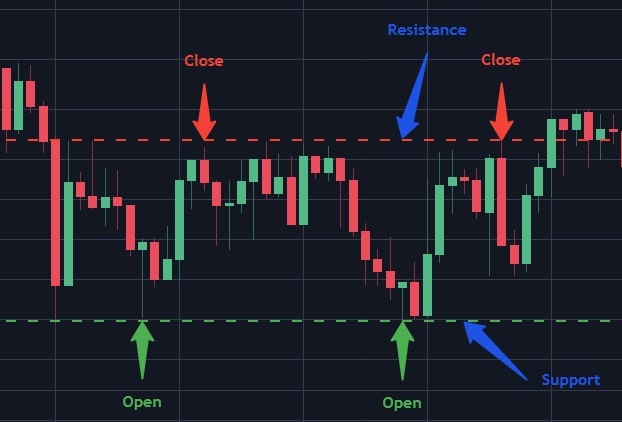
Range trading involves identifying assets that are trading within a defined price range, bouncing between clear support and resistance levels. The strategy is to buy near the support level (the price floor) and sell near the resistance level (the price ceiling).
- How it Works: Identify cryptocurrencies that are not trending strongly but are consolidating within a horizontal channel. Draw horizontal lines at clear support and resistance levels.
- Tools: Charting tools to identify price channels, volume indicators to confirm strength.
- Pros: Relatively straightforward to identify, good for sideways markets.
- Cons: Ranges can break unexpectedly, leading to significant losses if stop-losses aren't used.
3. Breakout Trading Strategy
Breakout trading is a strategy where traders enter a position when the price of an asset moves outside a defined range or pattern (like a triangle, flag, or consolidation zone), signaling the start of a new trend. The idea is to catch the momentum early.
- How it Works: Identify cryptocurrencies that have been consolidating. Look for increasing volume as the price approaches a resistance (for a buy) or support (for a sell) level. Enter the trade once the price convincingly breaks through.
- Tools: Volume indicators, trendlines, candlestick patterns (e.g., strong bullish/bearish candles).
- Pros: Can lead to significant profits if a new strong trend emerges.
- Cons: High risk of false breakouts, where the price breaks out only to reverse quickly. Confirmation is key.
4. News-Based (Event-Driven) Trading Strategy
This strategy involves reacting quickly to significant news events, announcements, or regulatory developments that are likely to impact a cryptocurrency's price. Examples include major exchange listings, project updates, partnerships, or macroeconomic news that affects the broader crypto market.
- How it Works: Stay constantly updated with crypto news sources, social media (Twitter, Telegram), and project announcements. Anticipate how news might affect price and enter trades quickly based on the expected direction.
- Tools: Real-time news feeds, fast execution platform.
- Pros: Can yield very high profits in a short period if the news impact is strong.
- Cons: Extremely high risk due to rapid price movements and unpredictable market reactions. Requires swift decision-making and often involves high slippage. Not recommended for complete beginners without significant practice.
Crucial Tools and Concepts for Success in Crypto Day Trading
Beyond strategies, understanding certain analytical tools and psychological aspects is vital for sustainable success in cryptocurrency day trading.
1. Basic Technical Analysis
Technical analysis is the study of past price movements and volume to predict future price action. For beginners, focus on these core components:
- Candlestick Patterns: These visual representations of price action provide insights into market sentiment. Learn to recognize basic patterns like Doji, Hammer, Engulfing patterns, and their implications.
- Support and Resistance: These are price levels where an asset tends to pause or reverse. Support is a price floor where buying interest is strong; resistance is a price ceiling where selling interest is strong.
- Moving Averages (MA): These indicators smooth out price data to identify trends. Common MAs include the 50-period and 200-period Simple Moving Averages (SMA) or Exponential Moving Averages (EMA). Crossovers can signal trend changes.
- Volume: High volume accompanying price movements indicates stronger conviction behind that move. Low volume can suggest weakness or lack of interest.
2. The Power of Trading Psychology
Perhaps the most overlooked but critical aspect of crypto day trading is trading psychology. Emotions like fear, greed, hope, and regret can severely impact your judgment and lead to irrational decisions. Maintaining discipline and a clear mind is paramount.
- Emotional Control: Do not let fear of missing out (FOMO) push you into bad trades, or fear of losing lead you to exit good trades prematurely. Similarly, do not let greed prevent you from taking profits.
- Discipline: Stick to your trading plan. If your plan says exit at a certain price, do it, regardless of how you feel.
- Patience: Not every day offers prime trading opportunities. Sometimes, the best trade is no trade.
- Journaling: Keep a detailed trading journal. Record every trade, including your entry/exit points, reasons for the trade, emotions felt, and lessons learned. This helps identify patterns in your behavior and improve over time.
Practical Tips for Beginner Crypto Day Traders
To maximize your chances of success and minimize common pitfalls, consider these actionable tips:
- Start Small (or Paper Trade): Begin with a minimal amount of capital or use a demo account (paper trading) to practice your strategies without risking real money. This builds confidence and experience.
- Focus on a Few Assets: Don't try to trade every cryptocurrency. Master a few highly liquid and volatile assets like Bitcoin (BTC) or Ethereum (ETH) first.
- Always Use Stop-Loss Orders: We cannot stress this enough. A stop-loss is your primary defense against catastrophic losses, especially in a market as volatile as crypto.
- Don't Over-Leverage: While leverage can amplify profits, it also magnifies losses. For beginners, it's best to avoid or use very low leverage until you have significant experience.
- Continuous Learning: The crypto market evolves rapidly. Stay updated on market trends, new technologies, and refine your technical analysis skills. Read books, follow reputable analysts, and join educational communities.
- Manage Your Time and Energy: Day trading is demanding. Ensure you are well-rested and can dedicate focused attention during your trading sessions.
- Take Breaks: Step away from the screen when you feel overwhelmed, emotional, or are experiencing a string of losses. A clear mind is essential for good decisions.
Common Pitfalls to Avoid in Crypto Day Trading
Awareness of common mistakes can help beginners avoid costly errors:
- Chasing Pumps: Buying into cryptocurrencies that are experiencing rapid, parabolic price increases (often due to manipulation or hype) is extremely risky. These "pumps" often end in sharp "dumps."
- Ignoring Risk Management: As highlighted, neglecting proper risk management is a surefire way to blow up your trading account.
- Overtrading: Feeling the need to be constantly in a trade, even when no clear opportunities exist. This leads to impulsive decisions and increased transaction costs.
- Lack of a Plan: Trading without a predefined strategy, entry/exit rules, and risk management guidelines is akin to gambling.
- Emotional Trading: Allowing fear and greed to dictate your decisions instead of following your logical trading plan.
- Not Understanding Fees: Transaction fees, withdrawal fees, and funding rates (for leveraged positions) can significantly eat into your profits, especially with frequent trades like scalping.
Frequently Asked Questions
Is crypto day trading profitable for beginners?
While crypto day trading can be profitable, it's inherently risky and challenging, especially for beginners. Success requires significant learning, discipline, and consistent application of risk management. Many beginners lose money initially. Profitability increases with experience, a solid trading plan, and strong trading psychology.
What is the minimum capital needed to start crypto day trading?
There's no strict minimum, but it's advisable to start with an amount you are comfortable losing. Many exchanges allow you to start with as little as $50-$100. However, for meaningful profits after factoring in fees and potential losses, a starting capital of at least $500-$1,000 is more practical. Remember to use only disposable income, not essential funds.
How much time does crypto day trading require daily?
The time commitment varies greatly depending on your chosen strategy. Scalping or highly active strategies can demand several hours of focused attention daily. Range trading or breakout trading might require monitoring charts for specific setups. Generally, crypto day trading is not a passive activity and requires dedicated time for market analysis, trade execution, and post-trade review.
What are the best cryptocurrencies for day trading?
For day trading, the best cryptocurrencies are typically those with high liquidity and significant volatility. Bitcoin (BTC) and Ethereum (ETH) are prime examples due to their large market caps and active trading volumes, which allow for quick entry and exit without significant price impact. Other altcoins can offer higher volatility but may have lower liquidity, making them riskier for beginners.
How important is trading psychology in day trading?
Trading psychology is arguably one of the most critical factors for long-term success in day trading. Emotions like fear, greed, and impatience can lead to impulsive decisions, deviation from your trading plan, and ultimately, significant losses. Mastering emotional control, maintaining discipline, and developing resilience are as important as understanding technical analysis or specific crypto day trading strategies for beginners.

0 Komentar