
How to Choose the Right Cloud Computing Service: An Expert's Definitive Guide
In today's hyper-digital landscape, selecting the optimal cloud computing service is no longer just an IT decision; it's a strategic imperative that directly impacts your business's agility, innovation, and bottom line. With a myriad of providers and service models available, the journey to choose the right cloud computing service can feel daunting. This comprehensive guide, crafted by an SEO expert with deep insights into cloud strategy, will equip you with the knowledge and actionable frameworks to navigate this complex terrain, ensuring your cloud adoption aligns perfectly with your organizational goals and future growth.
Understanding Your Unique Business Needs and Objectives
Before you even begin evaluating cloud providers, the foundational step involves a meticulous assessment of your organization's specific requirements. This isn't just about lifting and shifting your current infrastructure; it's about reimagining how technology can empower your business. A clear understanding of your current IT landscape, future aspirations, and operational constraints is paramount for successful cloud service selection.
Assessing Current Infrastructure and Applications
- Application Portfolio Analysis: Catalogue all your existing applications. Identify their dependencies, performance requirements, data sensitivity, and interconnections. Are they legacy systems requiring re-platforming, or can they be easily containerized for a cloud-native environment?
- Data Residency and Compliance Requirements: For businesses operating in regulated industries (healthcare, finance) or across multiple geographies, data governance and residency are non-negotiable. Understand regulations like GDPR, HIPAA, or industry-specific standards that dictate where your data must reside and how it must be protected.
- Performance and Latency Needs: Critical applications, especially those serving global customers or requiring real-time processing, demand low latency and high performance. Map out your geographical user base and assess the proximity of cloud provider data centers.
- Budget and Resource Allocation: Beyond initial migration costs, consider ongoing operational expenses. What's your allocated budget for cloud services, and do you have the internal talent to manage a cloud environment, or will you need managed services?
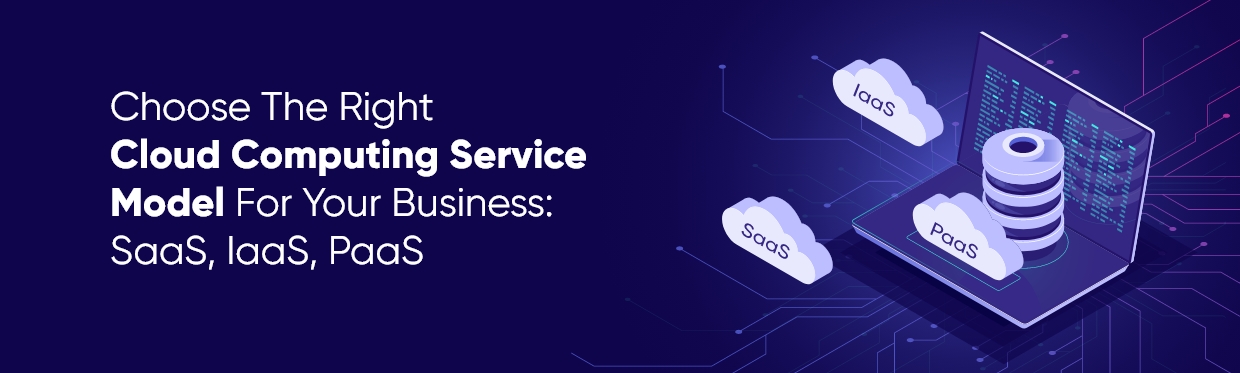
Exploring Cloud Service Models: IaaS, PaaS, and SaaS
The cloud offers different layers of abstraction and control, each suited for specific use cases. Understanding these fundamental service models is crucial for making an informed decision about the type of cloud solution that best fits your needs. Each model dictates the level of responsibility you retain versus what the cloud provider manages.
Infrastructure as a Service (IaaS)
IaaS provides the fundamental building blocks of cloud computing: virtualized computing resources over the internet. This includes virtual machines, storage, networks, and operating systems. You manage the applications, data, runtime, middleware, and OS, while the provider manages virtualization, servers, storage, and networking.
- When to Choose IaaS: Ideal for companies that need high levels of control over their infrastructure, such as developing custom applications, hosting complex websites, or managing specific workloads. It offers maximum flexibility and is often the first step in a significant cloud migration journey.
- Key Benefits: High flexibility, granular control, pay-as-you-go pricing, and easy scalability.
Platform as a Service (PaaS)
PaaS offers a complete development and deployment environment in the cloud, with resources that enable you to deliver everything from simple cloud-based apps to sophisticated enterprise applications. The provider manages all the underlying infrastructure, including servers, storage, networking, and databases, as well as the operating systems, middleware, and runtime environments.
- When to Choose PaaS: Perfect for developers and organizations focused on rapid application development and deployment, without the overhead of managing the underlying infrastructure. It accelerates time-to-market for new applications.
- Key Benefits: Increased developer productivity, faster deployment, reduced operational overhead, and built-in scalability.
Software as a Service (SaaS)
SaaS delivers ready-to-use software applications over the internet, on a subscription basis. The cloud provider manages all aspects of the application, from infrastructure to maintenance, updates, and security. Users simply access the application via a web browser or mobile app.
- When to Choose SaaS: Best for businesses that need off-the-shelf solutions like CRM, ERP, email services, or collaboration tools, without wanting to manage any IT infrastructure or software.
- Key Benefits: Ease of use, minimal IT management, immediate access, and predictable subscription costs.
Strategic Cloud Deployment Models: Public, Private, Hybrid, and Multi-Cloud
Beyond service models, the deployment model defines where your cloud infrastructure resides and how it's accessed. Your choice here significantly impacts security, compliance, and overall cloud architecture.
Public Cloud
Services are delivered over the public internet by a third-party provider (e.g., AWS, Azure, Google Cloud). It offers immense scalability, cost-effectiveness, and broad service offerings. Ideal for non-sensitive data and web-facing applications.
Private Cloud
Cloud infrastructure is exclusively used by a single organization. It can be physically located on-premises or hosted by a third-party provider. Offers maximum control and security, often used for highly sensitive data or strict compliance requirements.
Hybrid Cloud
A combination of public and private clouds, allowing data and applications to move between them. This offers flexibility, enabling businesses to leverage the strengths of both models – keeping sensitive data in a private cloud while using the public cloud for burstable workloads or less sensitive applications. A well-executed hybrid cloud strategy can provide an optimal balance of control and agility.
Multi-Cloud Strategy
Involves using multiple public cloud providers (e.g., AWS for one workload, Azure for another). This strategy mitigates vendor lock-in, allows for best-of-breed services, and enhances resilience. A robust multi-cloud strategy requires careful planning for interoperability and management.
Key Evaluation Criteria for Cloud Providers
Once you've defined your needs and understood the cloud models, it's time to evaluate potential providers. This systematic approach ensures you consider all critical aspects beyond just pricing.
1. Security and Compliance
This is arguably the most critical factor. Investigate the provider's security posture, certifications (ISO 27001, SOC 2, HIPAA, PCI DSS), and data encryption capabilities (in transit and at rest). Understand their shared responsibility model – what they secure versus what you secure. Ensure they meet your specific security compliance needs and support your data governance framework.
2. Performance and Reliability
Examine their uptime guarantees, often outlined in their Service Level Agreement (SLA). Look for providers with a global network of data centers to ensure low latency for your users. Inquire about their redundancy measures, backup strategies, and historical performance metrics. High availability is crucial for business continuity.
3. Cost Management and Transparency
Cloud pricing can be complex, involving compute, storage, data transfer, and various services. Request detailed pricing models and look for transparent billing. Focus on cost optimization features like reserved instances, spot instances, and auto-scaling to manage expenses effectively. Always calculate the Total Cost of Ownership (TCO), including potential hidden costs like data egress fees.
4. Scalability and Elasticity
The ability to rapidly scale resources up or down based on demand is a core cloud benefit. Ensure the provider offers robust auto-scaling capabilities and sufficient capacity to handle your peak workloads and future growth. This is fundamental to leveraging the true power of scalability in the cloud.
5. Support and Managed Services
Evaluate the quality and availability of customer support. Do they offer 24/7 support? What are the response times? Do they provide managed services for specific workloads or infrastructure components if your internal team lacks expertise? A strong support ecosystem is invaluable, especially during a complex cloud migration.
6. Ecosystem and Integrations
Consider the provider's marketplace, third-party integrations, and API accessibility. A rich ecosystem allows for seamless integration with your existing tools and future solutions, reducing the risk of vendor lock-in. Look for open standards and robust APIs that facilitate interoperability.
7. Innovation and Future Roadmap
Cloud providers are constantly innovating. Research their roadmap for new services, AI/ML capabilities, serverless computing, edge computing, and other emerging technologies. Choosing a forward-thinking provider ensures your infrastructure remains cutting-edge.
8. Disaster Recovery and Business Continuity
A comprehensive disaster recovery plan is essential. Understand the provider's capabilities for backup, replication, and failover across different regions or availability zones. Ensure their DR solutions align with your Recovery Time Objective (RTO) and Recovery Point Objective (RPO).
The Selection Process: A Step-by-Step Guide
Armed with knowledge, you can now embark on a structured selection process to identify the ideal cloud partner.
- Define Your Objectives and Prioritize Criteria: Clearly articulate what you aim to achieve with cloud adoption (e.g., reduce costs, improve agility, enhance security). Rank your evaluation criteria based on their importance to your business.
- Shortlist Potential Providers: Based on your initial assessment and criteria, narrow down the field to 2-4 leading cloud providers (e.g., AWS, Azure, Google Cloud, Oracle Cloud, IBM Cloud, Alibaba Cloud, or specialized regional providers).
- Conduct a Proof-of-Concept (POC): For critical workloads, consider running a small-scale POC with your top contenders. This hands-on experience will provide invaluable insights into performance, ease of use, and actual costs.
- Deep Dive into Pricing and TCO: Engage with sales teams to get detailed quotes. Use online calculators, but also consider hidden costs. Negotiate favorable terms, especially regarding data egress fees which can contribute significantly to your Total Cost of Ownership.
- Review Service Level Agreements (SLAs): Scrutinize the SLAs for uptime, performance, and support. Understand the penalties for non-compliance and ensure they align with your business's risk tolerance.
- Plan Your Cloud Migration Strategy: Once a provider is chosen, develop a detailed cloud migration plan. This involves assessing applications for re-hosting, re-platforming, re-factoring, or retiring. Consider engaging cloud migration specialists if internal expertise is limited.
- Establish Governance and Cost Optimization Frameworks: Post-migration, continuous monitoring and management are crucial. Implement cloud governance policies, establish cost visibility tools, and regularly review resource utilization for ongoing cost optimization.
Avoiding Common Pitfalls in Cloud Selection
Even with careful planning, certain missteps can derail your cloud journey. Being aware of these can help you steer clear.
- Underestimating Costs: The pay-as-you-go model can be deceptive. Without proper monitoring and governance, costs can spiral. Always factor in data transfer costs, managed services, and potential over-provisioning.
- Ignoring Security and Compliance from Day One: Retrofitting security or compliance is far more challenging and costly than embedding it into your design from the outset.
- Failing to Plan for Vendor Lock-in: While complete avoidance is difficult, a well-thought-out multi-cloud strategy or leveraging open-source technologies can mitigate dependence on a single provider's proprietary services.
- Lack of Internal Expertise: Cloud adoption requires new skill sets. Invest in training your team or consider engaging external cloud consultants to bridge knowledge gaps.
- Neglecting Data Governance: As data moves to the cloud, ensuring its integrity, privacy, and compliance with regulations requires a robust data governance framework.
Frequently Asked Questions
What is the primary difference between IaaS, PaaS, and SaaS?
The core difference lies in the level of management and control you retain versus what the cloud provider handles. IaaS gives you the most control, managing operating systems, applications, and data, while the provider handles the underlying infrastructure. PaaS abstracts away the OS and runtime, allowing you to focus purely on application development. SaaS is a fully managed application, where the provider handles everything, and you simply use the software via a web browser, requiring no infrastructure management on your part.
How important is a Service Level Agreement (SLA) when choosing a cloud provider?
An SLA is critically important as it contractually defines the level of service you can expect from your cloud provider, including uptime guarantees, performance metrics, and support response times. It also outlines the remedies or penalties if these agreed-upon service levels are not met. Reviewing the SLA helps you understand the provider's commitment to reliability and availability, which is vital for business continuity and risk management.
Can I easily switch cloud providers if I make the wrong choice?
While technically possible, switching cloud providers, also known as de-clouding or cloud repatriation, can be a complex, costly, and time-consuming process. Challenges include data migration complexity, application re-architecture, and potential vendor lock-in due to reliance on proprietary services. This underscores the importance of a thorough selection process from the outset and considering a multi-cloud strategy to mitigate future switching difficulties.
What is a multi-cloud strategy and why would a business adopt one?
A multi-cloud strategy involves using services from two or more public cloud providers simultaneously, rather than relying on a single one. Businesses adopt this strategy for several reasons: to avoid vendor lock-in, to leverage best-of-breed services from different providers, to enhance resilience and disaster recovery capabilities by distributing workloads, and to meet specific regulatory or geographical requirements. It offers greater flexibility and reduces single points of failure, though it adds complexity in management and integration.
How do I calculate the Total Cost of Ownership (TCO) for cloud computing?
Calculating Total Cost of Ownership (TCO) for cloud computing goes beyond just the monthly subscription fees. It involves factoring in initial migration costs (e.g., re-platforming, data transfer), ongoing operational costs (compute, storage, network egress fees, managed services, support plans), labor costs (training, cloud architects, operations staff), and potential hidden costs like data ingress/egress fees, API calls, and premium features. A comprehensive TCO analysis compares these cloud costs against your current on-premises expenses to reveal the true financial impact and benefits of cloud adoption.

0 Komentar