
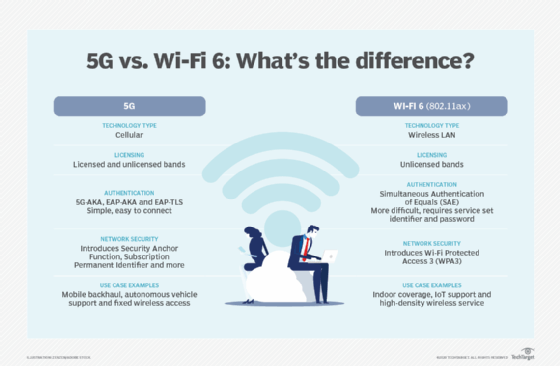
5G vs Wi-Fi 6: The Ultimate Performance Benchmark for Next-Gen Connectivity
The dawn of advanced wireless connectivity has presented us with two formidable contenders vying for supremacy in the digital realm: 5G and Wi-Fi 6. Both promise revolutionary speeds, ultra-low latency, and enhanced capacity, but how do they truly stack up in a direct performance benchmark? Navigating the nuances of these cutting-edge technologies is crucial for businesses, consumers, and innovators alike. This comprehensive guide will dissect the capabilities of each, providing an in-depth comparison to help you understand which technology excels in various scenarios and how they ultimately shape the future of our interconnected world.
Understanding the Pillars of Next-Generation Wireless: 5G
5G, the fifth generation of cellular technology, represents a monumental leap forward from its predecessors. Designed to handle an unprecedented volume of data traffic and connect billions of devices, 5G is not just about faster mobile internet; it's about enabling a new era of connectivity for everything from autonomous vehicles to smart cities. Its architecture is built upon three primary pillars:
- Enhanced Mobile Broadband (eMBB): Delivering significantly higher speeds, allowing for rapid downloads, seamless 4K/8K video streaming, and immersive experiences like virtual reality (VR) and augmented reality (AR) on the go.
- Ultra-Reliable Low-Latency Communications (URLLC): Crucial for mission-critical applications where even a few milliseconds matter, such as industrial automation, remote surgery, and vehicle-to-everything (V2X) communication.
- Massive Machine-Type Communications (mMTC): Supporting a vast number of connected devices with low power consumption, ideal for the burgeoning Internet of Things (IoT) ecosystem, from smart sensors to smart home devices.
The Spectrum Advantage and Challenges of 5G
5G operates across a wide range of frequencies, each with distinct characteristics:
- Low-band (sub-1 GHz): Offers extensive coverage, similar to 4G LTE, but with more moderate speed improvements. It's the backbone for widespread 5G availability.
- Mid-band (1-6 GHz, often referred to as sub-6 GHz): Strikes a balance between coverage and speed, providing a significant boost over 4G and forming the core of most initial 5G deployments. This is where most everyday 5G experiences occur.
- High-band (millimeter wave or mmWave, 24 GHz+): Delivers truly blistering speeds (multi-gigabit per second) and ultra-low latency. However, its range is limited, and it's highly susceptible to obstructions, making it ideal for dense urban areas, stadiums, or specific enterprise campuses.
The deployment of 5G networks involves significant infrastructure investment, including new base stations and fiber backhaul, making its widespread availability a gradual process. Users seeking to leverage 5G's full capabilities must ensure their devices are 5G-compatible and within range of a strong 5G signal.
Decoding Wi-Fi 6: The Evolution of Local Area Networks
Wi-Fi 6, officially known as 802.11ax, is not just an incremental upgrade; it’s a foundational redesign of the Wi-Fi standard aimed at improving performance in congested environments. While 5G focuses on wide-area cellular connectivity, Wi-Fi 6 is engineered to enhance local area networks (LANs), particularly in scenarios with numerous connected devices. Its core innovations are geared towards efficiency and capacity rather than just raw speed in single-device scenarios.
Key Innovations Driving Wi-Fi 6 Performance
- Orthogonal Frequency Division Multiple Access (OFDMA): This is a game-changer. Unlike previous Wi-Fi versions where each device had to wait its turn to send data, OFDMA allows a single transmission to carry data for multiple devices simultaneously. This significantly improves efficiency and reduces latency, especially in multi-device environments like smart homes or busy offices.
- Multi-User Multiple-Input, Multiple-Output (MU-MIMO): While present in Wi-Fi 5 (802.11ac), Wi-Fi 6 enhances MU-MIMO to support more simultaneous upstream and downstream connections, further boosting capacity and throughput.
- Target Wake Time (TWT): A power-saving feature that allows devices to negotiate when and how often they will wake up to send or receive data. This dramatically extends battery life for IoT devices and smartphones connected to a Wi-Fi 6 network.
- 1024-QAM: A more efficient data encoding scheme that allows more data to be packed into each signal, leading to higher theoretical peak speeds.
- BSS Coloring: Helps to reduce interference in dense environments by "coloring" network transmissions, allowing devices to ignore traffic from other overlapping networks, thus improving overall network performance.
Wi-Fi 6 operates in the 2.4 GHz and 5 GHz bands, similar to older Wi-Fi standards, ensuring backward compatibility. The newer Wi-Fi 6E standard extends this capability into the 6 GHz band, providing even more pristine, uncongested spectrum for even higher speeds and lower latency, particularly beneficial for high-bandwidth applications.
5G vs Wi-Fi 6: A Direct Performance Benchmark
Now, let's pit these two wireless titans against each other across critical performance metrics:
1. Speed (Throughput)
- 5G: Theoretical peak speeds can reach up to 10 Gbps, particularly with mmWave 5G. Real-world speeds vary widely depending on spectrum, network congestion, and location, typically ranging from 100 Mbps to 1 Gbps or more in good conditions.
- Wi-Fi 6: Theoretical peak speeds can reach up to 9.6 Gbps for a single access point across multiple devices. For a single device, real-world speeds often exceed 1 Gbps, particularly on a less congested 5 GHz or 6 GHz (Wi-Fi 6E) channel.
Benchmark Insight: For raw, single-device peak speed, especially in a localized, controlled environment, Wi-Fi 6 (especially 6E) can match or even exceed 5G's performance. However, 5G offers high speeds over a much wider area without needing a local access point.
2. Latency
- 5G: Designed for ultra-low latency, with theoretical targets as low as 1 millisecond (ms) for URLLC applications. Real-world latency typically ranges from 10-30 ms, significantly lower than 4G.
- Wi-Fi 6: While not designed specifically for URLLC, Wi-Fi 6's OFDMA and MU-MIMO enhancements significantly reduce latency in congested Wi-Fi environments. Typical latency within a local network is often below 10 ms, with ideal scenarios reaching 2-5 ms.
Benchmark Insight: 5G's design for URLLC gives it an edge for truly mission-critical, wide-area low-latency applications. However, for most consumer and enterprise applications within a local network, Wi-Fi 6 offers excellent low-latency performance that is more than sufficient.
3. Capacity (Device Support)
- 5G: Built to connect millions of devices per square kilometer (mMTC), making it ideal for large-scale IoT deployments and dense urban environments.
- Wi-Fi 6: Designed to handle a high density of devices within a local network. OFDMA and MU-MIMO allow multiple devices to communicate simultaneously, significantly improving aggregate throughput and reducing congestion compared to older Wi-Fi standards.
Benchmark Insight: Both excel in capacity, but for different scales. 5G is designed for massive, wide-area IoT deployments, while Wi-Fi 6 is optimized for high-density local networks like offices, smart homes, and public venues.
4. Range and Mobility
- 5G: Offers broad geographic coverage (especially sub-6 GHz) and supports seamless handoffs between cell towers, making it ideal for mobile users and devices. MmWave 5G has limited range and struggles with obstructions.
- Wi-Fi 6: Limited to the range of the access point, typically within a building or a few hundred feet outdoors. Mobility is restricted to the coverage area of the Wi-Fi network.
Benchmark Insight: For true mobility and wide-area coverage, 5G is the clear winner. Wi-Fi 6 is inherently a local area technology.
5. Power Efficiency
- 5G: While 5G modems can consume more power than 4G, network slicing and other optimizations aim to improve efficiency.
- Wi-Fi 6: Features like Target Wake Time (TWT) significantly reduce power consumption for connected devices, making it highly efficient for battery-powered IoT devices and smartphones.
Benchmark Insight: For device-side power efficiency within a local network, Wi-Fi 6 has a distinct advantage due to TWT.
6. Security
- 5G: Incorporates robust security features inherent in cellular networks, including strong encryption and mutual authentication between devices and the network. Private 5G networks offer enhanced control and security for enterprises.
- Wi-Fi 6: Supports WPA3, the latest and most secure Wi-Fi Protected Access protocol, offering stronger encryption and enhanced protection against brute-force attacks.
Benchmark Insight: Both technologies offer strong security protocols. 5G's cellular architecture provides inherent advantages for end-to-end security and network slicing for isolated traffic, while Wi-Fi 6 leverages WPA3 for robust local network protection.
Use Cases: When to Choose Which?
Understanding the performance benchmarks helps us delineate their ideal applications:
When 5G Shines:
- Mobile Broadband: Unparalleled speed and low latency for smartphones, tablets, and laptops on the go.
- Fixed Wireless Access (FWA): Providing high-speed internet to homes and businesses in areas underserved by fiber.
- Industrial IoT and Automation: URLLC for critical real-time control in factories, robotics, and smart infrastructure.
- Autonomous Vehicles: V2X communication requiring ultra-low latency and high reliability.
- Public Safety and Emergency Services: Dedicated, reliable communication channels.
- Remote Operations: Enabling remote surgery or heavy machinery control where real-time feedback is paramount.
Actionable Tip: If your primary need is high-speed, low-latency connectivity that extends beyond the confines of a building and supports seamless mobility, 5G is your go-to solution. Consider exploring 5G network providers in your area.
When Wi-Fi 6 Excels:
- Home Networks: Handling numerous smart devices, 4K/8K streaming, online gaming, and video conferencing simultaneously without congestion.
- Enterprise and Office Environments: Supporting a high density of users and devices, ensuring robust and efficient connectivity for all employees.
- Public Venues (Stadiums, Airports, Convention Centers): Providing high-capacity, high-speed access to thousands of users in a confined space.
- Local IoT Deployments: Connecting a multitude of sensors, smart appliances, and other IoT devices within a building, leveraging TWT for extended battery life.
- High-Bandwidth Local Data Transfer: Rapidly transferring large files between devices on a local network.
Practical Advice: For superior performance within a fixed location, especially with multiple connected devices, upgrading to a Wi-Fi 6 router and compatible devices is a smart investment. Look for features like OFDMA and MU-MIMO support when choosing your hardware.
The Complementary Nature: 5G and Wi-Fi 6 Working Together
It's crucial to understand that 5G and Wi-Fi 6 are not mutually exclusive competitors. Instead, they are complementary technologies that will increasingly work hand-in-hand to deliver a seamless and powerful connectivity experience. A typical scenario might involve:
- Using 5G for mobile connectivity when out and about, leveraging its wide area coverage and high speeds.
- Switching seamlessly to Wi-Fi 6 (or Wi-Fi 6E) for local connectivity at home or in the office, where it can provide superior capacity, power efficiency, and often higher consistent speeds for numerous devices in a fixed location.
This convergence, often referred to as network convergence, will allow devices to intelligently switch between cellular and Wi-Fi networks based on availability, signal strength, and application requirements, ensuring optimal performance and user experience. Enterprises are also exploring private 5G networks for critical operations, often integrated with their existing Wi-Fi 6 infrastructure for a hybrid approach to connectivity.
Frequently Asked Questions
What is the main difference between 5G and Wi-Fi 6?
The main difference lies in their primary application and reach. 5G is a cellular wide-area network (WAN) technology designed for mobile connectivity across vast distances, enabling high speeds and ultra-low latency on the go. Wi-Fi 6, on the other hand, is a local area network (LAN) technology optimized for high-capacity and efficient connectivity within a limited, fixed environment like a home, office, or public venue. While both offer significant performance improvements, their fundamental roles are distinct.
Which is faster: 5G or Wi-Fi 6?
In theoretical peak speeds, both 5G (especially mmWave) and Wi-Fi 6 (especially Wi-Fi 6E on 6 GHz) can achieve multi-gigabit per second speeds. In real-world scenarios, it depends heavily on context. For a single device very close to a powerful access point in a clean environment, Wi-Fi 6 can often provide higher consistent speeds. However, 5G provides high speeds over a much larger geographical area and maintains performance even when mobile. For most users, both offer speeds far exceeding typical internet requirements.
Can Wi-Fi 6 replace 5G, or vice versa?
No, neither technology is intended to entirely replace the other. They are complementary wireless technologies. 5G offers unparalleled mobility, wide-area coverage, and specific ultra-low latency capabilities for critical applications. Wi-Fi 6 delivers superior efficiency, capacity, and power savings for high-density device environments within a localized space. Many devices, like modern smartphones, support both standards, seamlessly switching between them for the best possible user experience based on location and network availability. Think of 5G as the highway and Wi-Fi 6 as the local streets – both essential for different journeys.
Is Wi-Fi 6 better for gaming than 5G?
For gaming within your home or office, Wi-Fi 6 is generally superior to 5G due to its inherently lower and more stable latency when connected directly to a high-performance router. Wi-Fi 6's OFDMA and MU-MIMO features ensure that your gaming device gets dedicated bandwidth, even in congested network environments. While 5G offers very low latency compared to older cellular generations, it can still be subject to more variability due to network congestion, signal strength fluctuations, and distance to the cell tower, which can be detrimental to competitive online gaming.

0 Komentar