
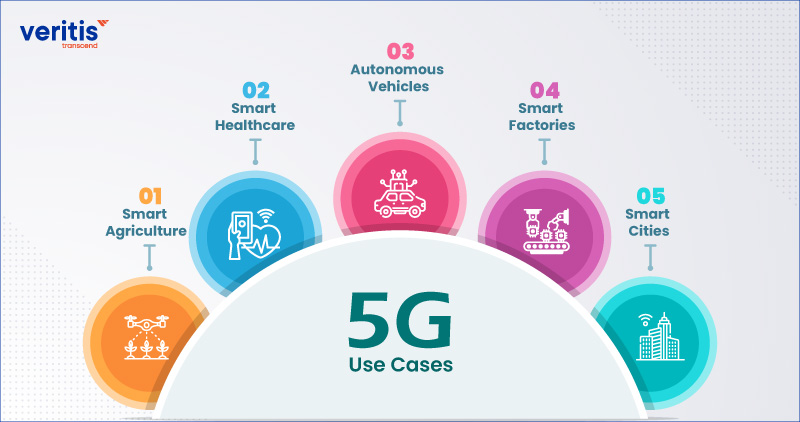
5G in Agriculture: Revolutionizing Farming with Next-Gen Connectivity and Smart Solutions
The agricultural sector, a cornerstone of global sustenance, is on the cusp of a profound transformation, driven significantly by the advent of 5G technology. This isn't merely an incremental upgrade; it represents a foundational shift, enabling unprecedented levels of connectivity, data processing, and automation that were previously unimaginable. From optimizing crop yields to enhancing livestock management and streamlining supply chains, 5G in agriculture is paving the way for a more efficient, productive, and sustainable future. This comprehensive guide explores how next-generation wireless networks are unlocking new possibilities, addressing long-standing challenges, and fundamentally reshaping the landscape of modern farming.
The Foundational Shift: Why 5G is a Game-Changer for Agriculture
For decades, rural agricultural areas have grappled with inadequate internet infrastructure, relying on slower, less reliable connections that hinder the adoption of advanced digital tools. Traditional Wi-Fi and even 4G networks often lack the necessary bandwidth, low latency, and capacity to support the massive data flows generated by modern smart farming operations. This is precisely where 5G steps in, offering a robust solution tailored to the unique demands of the agricultural environment.
Beyond Speed: Latency, Bandwidth, and Connectivity for Real-Time Decisions
While speed is a notable attribute, 5G's true power for agriculture lies in its trio of core capabilities: ultra-low latency, massive bandwidth, and the ability to connect an unprecedented number of devices (massive machine-type communications - mMTC). Low latency, often measured in single-digit milliseconds, is critical for applications requiring instantaneous feedback. Imagine an autonomous vehicle navigating a field, adjusting its path in real-time based on sensor data, or a drone swarm coordinating for crop spraying – these operations demand near-instantaneous communication to ensure safety and efficiency. High bandwidth facilitates the rapid transfer of enormous datasets, such as high-resolution imagery from drones, sensor readings from thousands of acres, or video feeds from remote monitoring systems.
- Ultra-Low Latency: Essential for real-time control of machinery, enabling precise operations like automated irrigation systems that respond instantly to soil moisture changes, or remote-controlled harvesting equipment.
- Massive Bandwidth: Supports the transmission of large data files, including 4K video from surveillance drones, hyperspectral images for crop health analysis, and comprehensive environmental data from numerous sources.
- Massive Connectivity: Allows for the deployment of thousands of interconnected IoT sensors across vast agricultural landscapes, creating a dense network of data points for unparalleled insights.
These capabilities collectively empower farmers to make more informed, data-driven decisions, transforming reactive practices into proactive strategies. The sheer volume of connected devices and the speed at which their data can be processed will lead to unprecedented levels of agricultural intelligence.
Precision Agriculture Redefined by 5G
Precision agriculture, at its core, is about doing the right thing, in the right place, at the right time. While the concept isn't new, 5G elevates its potential to an entirely new level, moving beyond mere mapping and variable rate applications to truly dynamic, hyper-localized interventions.
Granular Data Collection and Analysis
The foundation of effective precision agriculture is accurate, timely data. 5G facilitates this by enabling a dense network of diverse IoT sensors that can be deployed across fields, greenhouses, and livestock pens. These sensors can monitor a myriad of parameters:
- Soil Health: Real-time data on soil moisture, nutrient levels (nitrogen, phosphorus, potassium), pH, and temperature, allowing for optimized fertilizer and water application.
- Crop Monitoring: Sensors detecting plant health, growth rates, pest infestations, and disease outbreaks. Drones equipped with multispectral cameras can transmit high-resolution images via 5G for detailed analysis of crop stress, enabling targeted interventions rather than blanket treatments. This leads directly to crop optimization and reduced input costs.
- Environmental Conditions: Hyper-local weather stations providing precise data on temperature, humidity, wind speed, and rainfall, informing irrigation schedules and pest control strategies.
The ability to collect and transmit this real-time data instantly over 5G networks means that farmers can respond to changing conditions with unparalleled agility. Cloud-based analytics platforms can process this vast influx of information, providing actionable insights almost immediately. For example, an alert about a specific nutrient deficiency in a small section of a field can trigger an autonomous drone to apply a targeted micro-dose of fertilizer, minimizing waste and maximizing efficiency. This level of responsiveness is a hallmark of 5G-enabled digital transformation in agriculture.
Automated and Autonomous Operations
Perhaps one of the most visible impacts of 5G in agriculture will be the proliferation of autonomous vehicles and robotics. Self-driving tractors, planting robots, weeding machines, and harvesting automatons are no longer concepts from science fiction; they are becoming a reality, largely powered by 5G's reliable, low-latency connectivity.
These machines require constant, robust communication for several reasons:
- Navigation and Positioning: High-precision GPS augmented by real-time kinematic (RTK) corrections, often delivered over 5G, ensures machines operate with centimeter-level accuracy.
- Machine-to-Machine (M2M) Communication: Fleets of autonomous vehicles need to communicate with each other to avoid collisions, coordinate tasks, and share operational data seamlessly.
- Remote Control and Monitoring: Farmers or farm managers can remotely supervise operations, troubleshoot issues, and even take manual control of equipment from a central hub, or even off-site, thanks to 5G's reliable connection.
- Data Uploads: As these machines perform tasks, they collect vast amounts of data (e.g., yield maps, soil compaction data, planting depth) that needs to be uploaded rapidly for analysis and future planning.
The implications are profound: reduced labor costs, increased operational hours (machines can work day and night), minimized human error, and optimized resource use. Farmers can consider a phased approach to adopting autonomous solutions, starting with simpler tasks like remote monitoring of existing equipment before investing in fully autonomous fleets. Ensuring interoperability between different manufacturers' equipment will be key to maximizing the benefits of these advanced systems.
Enhancing Livestock Management and Aquaculture
The benefits of 5G extend far beyond crop fields, offering transformative capabilities for animal husbandry and aquatic farming. Remote monitoring and data collection are revolutionizing how livestock and fish are managed, leading to healthier animals and more productive operations.
Real-time Monitoring and Tracking for Livestock
Traditional livestock management often involves manual checks, which can be time-consuming and less precise. 5G enables continuous, automated surveillance of individual animals and entire herds. Wearable sensors attached to cattle, sheep, or pigs can transmit a wealth of data:
- Health Diagnostics: Monitoring vital signs (temperature, heart rate), activity levels, and behavioral patterns to detect early signs of illness, stress, or lameness. This proactive approach leads to earlier intervention and better animal welfare.
- Location Tracking: Precise GPS tracking to prevent loss, manage grazing patterns, and optimize pasture use. This is particularly useful in extensive farming systems.
- Reproductive Management: Sensors can detect estrus (heat) in animals, optimizing breeding cycles and improving conception rates, which is crucial for dairy and beef operations.
The ability to transmit this livestock tracking data in real-time over 5G allows for immediate alerts to farmers' devices, enabling rapid response to issues like calving, illness, or animals straying from designated areas. This significantly reduces manual labor and improves overall herd health and productivity. The insights gained from continuous monitoring also contribute to better decision-making regarding feed, medication, and breeding programs.
Smart Aquaculture Solutions
Aquaculture, the farming of aquatic organisms, also stands to benefit immensely from 5G. Fish farms, whether open-sea cages or land-based tanks, are complex environments requiring constant monitoring of water quality and fish health. 5G-enabled solutions can provide:
- Water Quality Monitoring: Real-time data on parameters like oxygen levels, pH, temperature, salinity, and ammonia, crucial for maintaining optimal conditions for aquatic life. Automated systems can adjust aeration or filtration based on this data.
- Automated Feeding Systems: Sensors can detect fish appetite and biomass, triggering precise, automated feeding, reducing waste and optimizing growth rates.
- Disease Prevention: Underwater cameras and biosensors can monitor fish behavior and health, detecting early signs of disease outbreaks and allowing for rapid isolation and treatment, preventing widespread loss.
The high bandwidth of 5G is particularly useful for transmitting high-definition video from underwater cameras, providing farmers with clear visual insights into their aquatic stock without needing to physically inspect every cage or tank. This level of detailed, continuous remote monitoring ensures healthier stock and more sustainable aquaculture practices.
Optimizing Supply Chains and Market Access
The impact of 5G in agriculture extends beyond the farm gate, promising to revolutionize the entire agricultural value chain, from cultivation to consumption. This connectivity can enhance transparency, efficiency, and market access for farmers.
Traceability and Transparency from Farm to Fork
Consumers increasingly demand to know the origin and journey of their food. 5G can facilitate unprecedented levels of traceability and transparency within the agricultural supply chain. By integrating sensors and connected devices at every stage – from planting and harvesting to processing, packaging, and distribution – a continuous stream of data can be collected and transmitted. This data can be used to power blockchain-enabled supply chain solutions, providing an immutable record of a product's journey.
- Real-time Tracking: Monitoring conditions (temperature, humidity) of produce during transit to ensure quality and prevent spoilage.
- Authenticity Verification: Providing consumers with QR codes on packaging that link to detailed information about the product's farm of origin, cultivation methods, and environmental footprint.
- Reduced Waste: Better visibility into inventory and logistics can minimize post-harvest losses and optimize delivery routes.
This enhanced visibility not only builds consumer trust but also helps identify bottlenecks and inefficiencies within the supply chain, leading to significant cost savings and improved fresh produce delivery. This is a critical aspect of the broader digital transformation of the food industry.
Improved Market Connectivity for Farmers
For many farmers, especially those in remote areas, access to timely market information and direct sales channels can be limited. 5G, by providing robust rural broadband, can bridge this digital divide:
- Market Intelligence: Farmers can access real-time market prices, demand forecasts, and consumer trends, enabling them to make better decisions about what to plant, when to harvest, and where to sell.
- Direct-to-Consumer Platforms: High-speed internet facilitates the creation and management of online stores, allowing farmers to sell directly to consumers, bypassing intermediaries and increasing their profit margins.
- Remote Expert Consultations: Farmers can connect with agronomists, veterinarians, and other agricultural experts via high-quality video calls, receiving timely advice without the need for on-site visits. This democratizes access to specialized knowledge.
By empowering farmers with better connectivity and information, 5G helps them become more competitive, resilient, and integrated into the global economy. This shift towards greater digital inclusion is vital for the long-term sustainability of small and medium-sized farms.
Overcoming Challenges and Future Prospects
While the potential of 5G in agriculture is immense, its widespread adoption faces several challenges that need to be addressed through concerted effort and strategic investment.
The Path Forward: Investment and Collaboration
The primary hurdle for 5G in agriculture is the deployment of infrastructure in vast, often sparsely populated rural areas. This requires significant investment from telecommunications companies, often necessitating government incentives and public-private partnerships. Strategies include:
- Rural Broadband Initiatives: Government programs aimed at expanding 5G coverage to underserved agricultural regions are crucial.
- Private Networks: Large farms or agricultural cooperatives might consider deploying their own private 5G networks, offering dedicated, secure connectivity tailored to their specific needs.
- Edge Computing: To process the massive amounts of data generated by farm sensors and machinery, edge computing infrastructure will be vital. This involves processing data closer to its source, reducing latency and reliance on distant cloud servers.
Beyond infrastructure, there's a need for digital literacy and training programs for farmers. Adopting new technologies requires new skills. Agricultural colleges, extension services, and agritech companies must collaborate to educate farmers on the benefits and practical applications of 5G-enabled solutions. Pilot programs and demonstration farms can play a key role in showcasing successful implementations and building confidence within the farming community.
Furthermore, cybersecurity is paramount. With an increasing number of connected devices, agricultural operations become more vulnerable to cyber threats. Robust security protocols and data privacy measures must be integral to any 5G deployment in agriculture. Farmers should be educated on best practices for securing their networks and data.
Sustainable Agriculture and Environmental Benefits
One of the most compelling long-term benefits of 5G in agriculture is its contribution to sustainable agriculture and environmental protection. By enabling unparalleled precision and efficiency, 5G helps minimize the environmental footprint of farming:
- Resource Optimization: Precise application of water, fertilizers, and pesticides reduces runoff, conserves natural resources, and minimizes pollution of soil and waterways.
- Reduced Carbon Footprint: Optimized routes for autonomous vehicles and efficient machinery operation lead to reduced fuel consumption and lower greenhouse gas emissions.
- Biodiversity Protection: Targeted interventions reduce the need for broad-spectrum chemicals, preserving beneficial insects and soil microbes.
- Waste Reduction: Real-time monitoring of produce quality and efficient supply chain management significantly reduce food waste from farm to consumer.
5G is not just about making farming more profitable; it's about making it more responsible. It offers the tools necessary to meet the growing global demand for food while simultaneously protecting the planet's vital resources. The synergy between advanced connectivity and environmental stewardship positions 5G as a crucial enabler for the future of food production.
Frequently Asked Questions
What is the primary advantage of 5G for precision agriculture?
The primary advantage of 5G for precision agriculture is its ability to provide ultra-low latency, massive bandwidth, and connect an unprecedented number of IoT sensors across vast fields. This enables the collection and real-time transmission of highly granular data (e.g., soil moisture, crop health, pest detection), allowing for immediate, hyper-localized interventions and optimal resource allocation. This level of responsiveness was not possible with previous network generations, fundamentally enhancing crop optimization.
How does 5G enable autonomous farming equipment?
5G enables autonomous farming equipment through its critical features: ultra-low latency and reliable connectivity. Low latency ensures that commands from central control systems or real-time sensor data are transmitted almost instantaneously to autonomous vehicles like tractors and drones, allowing for precise navigation, obstacle avoidance, and synchronized operations. High bandwidth facilitates the exchange of large datasets (e.g., high-definition video feeds, complex mapping data) between machines and cloud platforms, supporting sophisticated AI and machine learning algorithms that drive autonomous functions. This robust communication backbone is essential for safe and efficient automated operations.
Will 5G be accessible in remote agricultural areas?
Accessibility of 5G in remote agricultural areas is a significant challenge, but it is actively being addressed through various initiatives. While initial 5G deployments focused on urban centers, there's a growing recognition of the need for rural broadband expansion. Governments are investing in infrastructure, and telecommunication companies are exploring solutions like private 5G networks for large farms, satellite-integrated 5G, and advanced antenna technologies to extend coverage to underserved areas. The long-term vision for digital transformation in agriculture relies heavily on widespread rural 5G access.
What are the potential environmental benefits of 5G in farming?
The environmental benefits of 5G in farming are substantial, primarily driven by enhanced precision and efficiency. By enabling highly accurate data collection and targeted interventions, 5G supports sustainable agriculture. This leads to reduced usage of water, fertilizers, and pesticides, minimizing chemical runoff and conserving natural resources. Optimized machinery operations and logistics reduce fuel consumption and greenhouse gas emissions. Furthermore, improved remote monitoring and supply chain visibility help reduce food waste, contributing to a more environmentally responsible and resource-efficient food production system.
How can farmers prepare for 5G adoption?
Farmers can prepare for 5G adoption by first assessing their current connectivity needs and identifying areas where smart farming solutions could yield the most benefits. Key steps include researching available 5G services and pilot programs in their region, investing in 5G-ready equipment or ensuring future purchases are compatible, and exploring IoT sensors and data analytics platforms. Engaging with agricultural extension services, technology providers, and industry associations can provide valuable insights and training. Building digital literacy within the farm workforce is also crucial to effectively leverage the advanced capabilities that 5G will bring to their operations. Consider starting with smaller, focused projects to gain experience before a full-scale transition.

0 Komentar