
5G Energy Efficiency: Unpacking the Green Revolution Beyond 4G's Footprint
The global telecommunications industry is at a pivotal juncture, constantly striving for faster, more reliable connectivity. Yet, as data demands skyrocket, so does the imperative for sustainable solutions. At the forefront of this evolution is 5G technology, promising not just unprecedented speeds and lower latency but also a significant leap in energy efficiency improvements compared to 4G. This comprehensive guide delves into the intricate mechanisms and strategic design principles that position 5G as a far more environmentally conscious and economically viable network, directly addressing the growing concerns around the power consumption of mobile infrastructure. Understanding these advancements is crucial for network operators, policymakers, and anyone invested in a sustainable digital future, as 5G aims to revolutionize connectivity with a remarkably reduced energy footprint.
The Imperative for Energy Efficiency in Next-Gen Networks
As the digital economy expands, the energy demands of telecommunication networks have become a critical global concern. Traditional 4G LTE networks, while revolutionary in their time, were not designed with the same stringent energy optimization goals as 5G. Their inherent architecture often leads to higher operational costs and a substantial carbon footprint, largely due to continuous power requirements for base stations and less efficient signal processing. With billions of connected devices anticipated through the Internet of Things (IoT) and ever-increasing data traffic, the telecom sector faces immense pressure to mitigate its environmental impact while maintaining robust performance.
The shift to 5G is not merely about bandwidth; it's a fundamental redesign aimed at achieving a new paradigm of efficiency. Industry projections suggest that 5G networks can be up to 90% more energy efficient per unit of data than 4G. This isn't a small feat; it represents a strategic pivot towards sustainable connectivity, driven by both environmental responsibility and the economic necessity to reduce soaring electricity bills for network operators. The core difference lies in 5G's ability to transmit more data using less energy, thanks to a suite of innovative technologies and intelligent network management.
Foundational Technologies Driving 5G's Energy Revolution
The superior energy performance of 5G is not attributable to a single feature but rather a synergistic combination of architectural enhancements and advanced radio technologies. Each element plays a vital role in reducing the overall power consumption of the network.
Massive MIMO and Beamforming: Precision Power Delivery
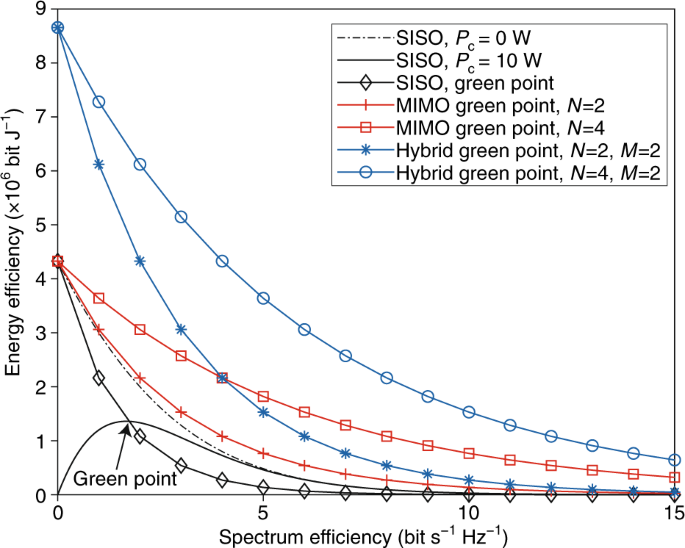
- Massive Multiple-Input Multiple-Output (MIMO): Unlike 4G, which typically uses a limited number of antennas, 5G employs Massive MIMO with hundreds of antennas at the base station. This allows for simultaneous transmission and reception of multiple data streams, dramatically increasing spectrum efficiency. Crucially, by directing signals precisely, less power is wasted on undirected broadcasts.
- Beamforming: This technology works hand-in-hand with Massive MIMO. Instead of broadcasting signals in all directions, 5G base stations use advanced algorithms to focus radio signals directly towards individual user devices. This targeted approach means that the signal strength needed to reach a device is significantly lower than a broad, omnidirectional broadcast. For network operators, this translates directly into reduced energy expenditure per user, leading to substantial energy savings. Imagine shining a flashlight directly at an object versus illuminating an entire room; beamforming is the former, vastly more efficient.
Dynamic Spectrum Sharing (DSS) and Flexible Duplexing
One of the key challenges during the 5G rollout is the coexistence with 4G networks. Dynamic Spectrum Sharing (DSS) allows operators to use the same frequency bands for both 4G and 5G traffic, dynamically allocating resources based on demand. This avoids the need for separate, energy-intensive 4G and 5G dedicated base stations for every frequency band, optimizing spectrum utilization and reducing the overall energy footprint. Furthermore, 5G's support for more flexible duplexing schemes (like dynamic TDD/FDD) allows for more efficient use of uplink and downlink capacities, adapting to real-time traffic patterns and avoiding the constant, high-power transmissions often seen in fixed 4G duplexing.
Advanced Sleep Modes and Discontinuous Reception (DRX)
A significant portion of energy consumption in 4G networks comes from base stations and user devices being "always on" or having limited deep sleep capabilities. 5G addresses this with sophisticated power-saving features:
- Enhanced Sleep Modes for Base Stations: 5G base stations (gNBs) can enter deeper sleep states during periods of low traffic, significantly reducing their idle power consumption. This includes turning off specific components or even entire radio units when not actively transmitting or receiving data.
- Discontinuous Reception (DRX) for Devices: For user equipment (UE), 5G implements more aggressive and flexible DRX cycles. Devices can "wake up" less frequently to check for data, staying in a low-power sleep mode for longer durations. This is particularly beneficial for IoT devices that transmit small amounts of data infrequently, extending battery life and reducing their overall energy impact on the network.
Network Slicing: Optimized Resource Allocation
Network slicing is a fundamental architectural feature of 5G that allows operators to create multiple virtual networks on top of a single physical infrastructure. Each slice can be optimized for specific services (e.g., ultra-low latency for autonomous vehicles, high bandwidth for video streaming, or massive connectivity for IoT). By allocating precisely the resources required for a given service, network slicing avoids over-provisioning and wasted energy. For example, a slice dedicated to low-data-rate IoT sensors will consume far less energy than a full-blown 4G connection attempting to serve the same function, leading to significant efficiency gains across diverse applications.
Edge Computing and Distributed Architectures
5G heavily leverages edge computing, bringing data processing and storage closer to the end-users and devices. By processing data at the network edge rather than sending it all the way back to centralized data centers, the amount of data traveling through the core network is reduced. This minimizes the energy consumed by backhaul transmission and core network equipment, contributing to a lower overall energy footprint. This distributed architecture also improves latency and enables new applications, all while being inherently more energy efficient.
Operational Efficiencies and Network Intelligence
Beyond the core radio technologies, 5G's emphasis on intelligent network management and software-defined architectures further enhances its energy efficiency.
AI and Machine Learning for Predictive Energy Management
The complexity of 5G networks necessitates advanced management tools. Artificial Intelligence (AI) and Machine Learning (ML) play a crucial role in optimizing 5G energy consumption. AI algorithms can analyze real-time traffic patterns, predict demand fluctuations, and dynamically adjust network resources, including powering down underutilized base station components or optimizing signal transmission parameters. This predictive capability allows networks to operate at peak efficiency, minimizing energy waste during off-peak hours or in areas with fluctuating traffic, contributing to a truly green network.
Enhanced Cell Planning and Smaller Cell Deployment
5G networks are characterized by a denser deployment of smaller cells (small cells, microcells, picocells) compared to the larger, more powerful macro cells of 4G. While this might seem counterintuitive from an energy perspective (more cells = more power?), the opposite is true. Smaller cells cover smaller geographical areas but require significantly less power to transmit signals effectively over shorter distances. This closer proximity to users means less power is needed to achieve a strong signal, leading to a substantial reduction in the overall network energy consumption. This strategic deployment also improves coverage and capacity in dense urban areas, enhancing user experience while being more energy conscious.
Software-Defined Networking (SDN) and Network Function Virtualization (NFV)
Software-Defined Networking (SDN) and Network Function Virtualization (NFV) are foundational to 5G's flexible and efficient architecture. These technologies decouple network functions from proprietary hardware, allowing them to run as software on standard servers. This virtualization enables resources to be allocated and scaled dynamically based on demand, reducing the need for dedicated, always-on hardware. NFV and SDN contribute to energy efficiency by:
- Optimized Resource Utilization: Virtualized functions can share common hardware resources, avoiding the underutilization common with dedicated appliances.
- Dynamic Scaling: Network functions can be scaled up or down instantly based on traffic load, ensuring that only necessary resources are consuming power.
- Reduced Hardware Footprint: Less physical hardware means lower cooling requirements and reduced energy consumption from the equipment itself.
The Tangible Benefits of 5G's Greener Footprint
The energy efficiency improvements in 5G translate into significant benefits that extend beyond the technical realm.
- Environmental Impact and Reduced Carbon Emissions: By consuming less energy per bit transmitted, 5G directly contributes to a lower carbon footprint for the telecommunications industry. This aligns with global efforts to combat climate change and promotes more sustainable digital infrastructure. It's a crucial step towards building truly sustainable 5G networks.
- Economic Benefits and Lower Operational Expenditure (OPEX): For network operators, electricity costs represent a substantial portion of their OPEX. 5G's superior energy efficiency means lower utility bills, leading to significant financial savings over the long term. These savings can be reinvested into further network expansion and innovation, creating a virtuous cycle.
- Enabling Sustainable IoT and Smart Cities: The low-power consumption capabilities of 5G, especially for IoT devices, are pivotal for the widespread deployment of smart city initiatives, smart agriculture, and industrial automation. Devices can operate for years on a single charge, reducing maintenance costs and the environmental impact associated with battery replacements. This supports the vision of a truly interconnected, yet energy-conscious, society.
- Corporate Social Responsibility (CSR): Adopting energy-efficient 5G technologies allows telecom companies to demonstrate a strong commitment to CSR, enhancing their brand reputation and attracting environmentally conscious customers and investors.
Challenges and the Path Forward
While 5G offers remarkable energy efficiency gains per unit of data, it's important to acknowledge that the initial deployment of 5G networks might see a temporary increase in overall energy consumption due to the denser infrastructure and the simultaneous operation of 4G and 5G networks. However, this is a transient phase. As 5G matures, and as traffic shifts predominantly to the more efficient 5G layer, the long-term trend points towards significant energy savings.
The industry continues to innovate, with ongoing research focusing on even more advanced materials, highly efficient power amplifiers, and further refinement of AI/ML-driven network optimization. Collaborative efforts between network operators, equipment vendors, and regulatory bodies are crucial to accelerate the adoption of these energy-saving technologies and ensure that the full potential of 5G's green capabilities is realized globally. The goal is not just to build a faster network but a fundamentally more responsible and sustainable one.
Frequently Asked Questions
Is 5G always more energy efficient than 4G in all scenarios?
While 5G is designed to be significantly more energy efficient per bit of data transmitted, the overall network energy consumption during initial deployment phases might temporarily increase due to the denser infrastructure and the concurrent operation of both 4G and 5G networks. However, for a given amount of data, 5G is inherently more efficient. As traffic migrates fully to 5G and older 4G infrastructure is phased out or optimized, the net energy savings will become more pronounced. Its efficiency shines brightest in high-traffic scenarios and when leveraging advanced features like sleep modes and network slicing.
How does 5G's energy efficiency benefit consumers and businesses directly?
For consumers, while direct electricity bill savings aren't immediately apparent, the enhanced battery life of 5G-enabled devices is a clear benefit, particularly for IoT gadgets. For businesses, especially those operating large IoT deployments or private 5G networks, the reduced power consumption translates directly into lower operational costs and a smaller carbon footprint, supporting their sustainability goals. It also enables more reliable and always-on connectivity for critical applications without excessive energy drain.
What role does AI play in 5G energy savings beyond just predictive management?
Beyond predictive management, AI and Machine Learning are pivotal in continuous, real-time optimization of 5G networks. AI can identify and rectify network anomalies that lead to power waste, fine-tune antenna configurations for optimal signal strength with minimum power, and even manage power distribution within base stations. It facilitates intelligent load balancing, ensuring that resources are dynamically allocated only where and when needed, preventing over-provisioning and idle energy consumption, ultimately contributing to a truly smart and sustainable network.
What is the long-term environmental impact of widespread 5G adoption?
The long-term environmental impact of widespread 5G adoption is overwhelmingly positive, primarily due to its superior energy efficiency per unit of data. By reducing the energy consumed to transmit data, 5G contributes to a significant reduction in the telecom sector's overall greenhouse gas emissions. Furthermore, 5G enables other industries to become more energy-efficient through applications like smart grids, optimized logistics, and precision agriculture, amplifying its positive environmental ripple effect. It's a critical technology for achieving global sustainability targets and building a greener digital future.

0 Komentar